 By John C.
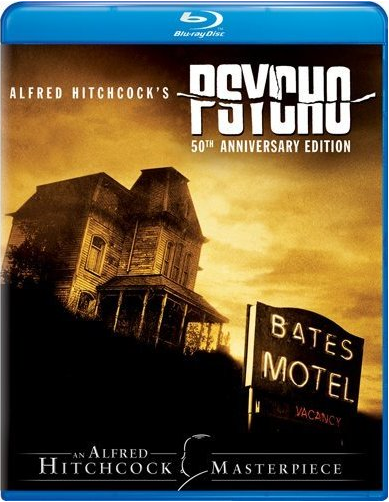
Marion Crane (Janet Leigh) first enters the shower 46 minutes into Alfred Hitchcock’s masterpiece Psycho. Some 50 years after the film’s initial release, that now-famous scene on the fateful night at the rundown Bates Motel is still shocking in it’s themes and brilliant in its execution. Up until this point, there is not as much as a flash of violence in the film. But after that scene where the main character is killed, we are on edge knowing that anything could happen.
The budget for Psycho paled in comparison to that of Alfred Hitchcock’s previous blockbusters. Released a year after his drastically different North By Northwest, Psycho went on to become a runaway hit, despite the fact that there were no advance screenings or admission to the theatre after the start of the movie.
In the 50 years since Psycho, gory violence has become largely associated with the horror/thriller genre. One of the most affecting scenes in Hitchcock’s film comes purely from what is never seen, yet so clearly, vividly is happening. Carefully shot over seven days, there were 70 different camera angles for the 45 second shower scene, yet not a single noticeable image of nudity or a plunging knife is actually seen.
Thanks to Bernard Hermann’s chilling and masterful score, we are kept on edge even when nothing is happening. And that’s one of the biggest distinctions between Psycho and some other examples of the horror movie genre: there are long stretches where we aren’t given the satisfaction of a jump moment. Which means when they do come, they’re even more affecting.
One of the most memorably creepy things about the film was Anthony Perkins’ disturbingly brilliant performance as Norman Bates. Perkins reprised his role many years later in two big screen sequels (the third of which he directed) as well as a TV follow-up. But most jarring to it’s legacy was the fact that Gus Van Sant attempted a pointless scene-for-scene remake of Psycho in 1998, where Vince Vaughan was oddly cast in the role.
Being the first movie to show it’s female character in a state of undress, and in one scene, a flushing toilet, Psycho was a groundbreaking movie in more ways than one. But it was ultimately the still-disturbing content that proved too much for some audiences. With reports of faintings, walk-outs, and a good helping of controversy that included backlashes from churches and psychiatrists, this still remains one of Hitchcock’s most widely debated, yet greatest cinematic achievements.
Few movies still manage to have as staggering an effect on mass audiences, fewer still to the point of some physically passing out. Other cases include William Friedkin’s The Exorcist, 13 years after Psycho, which included scenes of a possessed little girl vomiting, cursing and doing perverse things with a crucifix. Today it’s the moment in the true-life 127 Hours where a trapped mountain climber is forced to amputate his own arm.
There are numerous classic horror movies and psychological thrillers, many of which are being watched this week in honour of Halloween. But what remains one of the greatest benchmarks of the genre doesn’t concern itself with themes of demonic possession, the supernatural, or any fantastical creatures. Norman Bates and his mother issues remains one of the most disturbing depictions of a movie psycho, and 50 years later, Psycho is still a chilling, shocking and brilliant film.
 The Joy of Movies