By John C.
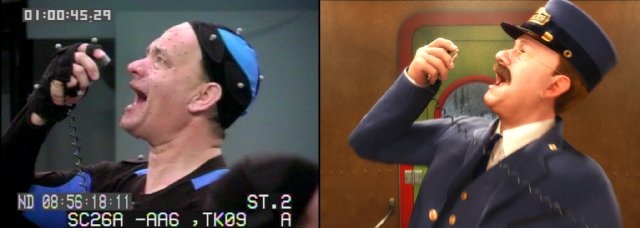
The motion (or performance) capture animation process is getting more advanced all the time, but there is still confusion and controversy amongst critics and audiences alike.
Those of you who saw Mars Needs Moms over the weekend (and stayed through the ‘behind the scenes’ video during the end credits) have a pretty good idea of how the process works. But seeing as the fun kids adventure tanked and only brought in under $7 million over the weekend, skepticism towards the technology seems to continue.
Actors perform their scenes on a plain set, wearing suits covered in sensors. Their motions are digitally recorded onto a computer, creating a wire frame or skeleton for the animators to use. Skin textures, clothing, backgrounds and environments are all created digitally. Similar technology was famously used for the character of Gollum in The Lord of the Rings trilogy, and also to create a younger carbon copy of actor Jeff Bridges in the recent Tron: Legacy. Steven Spielberg will be using the technology for his upcoming adaptation of The Adventures of Tintin: Secret of the Unicorn, but the process was arguably best used when director James Cameron literally transported us to the beautiful moon of Pandora in 2009’s smash hit Avatar.
Still, many audiences find the nearly life-like look of the animation to fall deeply into the “uncanny valley.” According to Wikipedia, the uncanny valley was a term coined by Japanese roboticist Masahiro Mori in 1970, referring to a study of robotics. The theory was that audiences are least receptive to representations of humans that are almost photorealistic, but not quite. It’s often subconscious, but sometimes a stylized character can elicit more emotional reaction than a character that looks almost real, but falls just short. For most people, the problems lie in the eyes.
The technology has been used by many studios, but in many ways it was pioneered by director Robert Zemeckis with his recently shutdown company ImageMovers Digital. Zemeckis was the first one to see the potential in using performance capture technology for feature-length films, with 2004’s The Polar Express. In the Christmas-themed film, Tom Hanks was able to provide the movements of six different characters, including the lead boy. Still, it was underappreciated by many audiences who found it to fall deep into the uncanny valley. I thought the animation here worked to brilliantly haunting effect, and regular readers will know that it remains one of my personal favourites for the Christmas season.
Directed by the young Gil Kenen, 2006’s Monster House was produced by the powerhouse team of Zemeckis and Spielberg, using the same technology. The excellent adventure film delivered great fun for older kids and adults, with dark twists and a distinct 1980’s feel. It was largely liked by critics, and the highly stylized look of the characters meant that complaints about the uncanny valley were more scarce.
The technology was getting better all the time, and there was an ethereal life-like quality to the animation in Zemeckis’ 2007 take on Beowulf. In 2009, Zemeckis directed another version of a classic story with A Christmas Carol. Because he was adapting the Charles Dickens masterpiece using motion capture animation, lead actor Jim Carrey was able to portray both Ebenezer Scrooge and the three ghosts, and it was a technique that worked to chilling effect.
And that gets us right back to Robert Zemeckis’ most recent ‘mo-cap’ outing as a producer, Mars Needs Moms. The uncanny valley will undoubtedly be blamed for the film’s low earnings over opening weekend, but because it wasn’t entirely engaging for adults, I think the problem more lies in the fact that you can’t rely on a target audience of kids to rush out on opening day.
Whether it is used for special effects or to create an entire film, motion capture is just another medium that some directors wish to use. Either way, the success of a film relies on the ability of the actors to give believable performances, and in the strength of the story. Say what you will about the realism of the animation, but if either of these things are off, then we really find ourselves in the uncanny valley.
 The Joy of Movies