By John Corrado
★★★ (out of 4)
 Harrison Ford is back cracking the whip as the titular archeologist in Indiana Jones and the Dial of Destiny, a film that earns the designation of legacy sequel as it finds Ford returning to the role fifteen years after Kingdom of the Crystal Skull.
At 80 years old, Ford is still able to jump off trains and ride a horse through the New York subway system, putting back on the fedora and cracking the bullwhip one last time. The result is a film that can’t reach the heights of the original trilogy, but works mostly as an earnest throwback.
The first film in the series to not be directed by Steven Spielberg, with the very capable James Mangold (Walk the Line, Logan, Ford v. Ferrari) taking over the reigns, Indiana Jones and the Dial of Destiny works best when simply striving to be a good ole fashioned adventure movie.
Mangold’s film finds an aging Doctor Jones being dragged back out for another globe-trotting adventure by his adult goddaughter Helena (Phoebe Waller-Bridge), who shows up at one of his lectures. She wants help locating a dial built by Archimedes that supposedly has the power to control time, which Indy and her father Basil Shaw (Toby Jones) tracked down years earlier.
But Dr. Jürgen Voller (Mads Mikkelson), a Nazi scientist who now works for NASA, is also after the dial, wanting to use it to rewrite the outcome of World War II. This tension is all set up in the film’s prologue, a raucous, war-time chase aboard a train featuring a digitally de-aged Ford, which is also one of the most entertaining stretches of the movie, with Indy and Basil stealing the dial from the Nazis in France circa 1939.
The film is mostly set thirty years later in the 1960s during the end of the Space Race, with Mangold able to explore Indy in a changing world that is leaving him behind. It’s a decent entry point for a years-later sequel, especially one that explores the idea of controlling the passage of time. Mangold does a decent job of staging the set-pieces (even if his blocking at times isn’t nearly as inventive as Spielberg’s), with the geriatric Ford gamely throwing himself into a series of fun chases across a variety of surfaces and vehicles, shot with a nostalgic tint by cinematographer Phedon Papamichael.
The film is a little long at 154 minutes (making it the longest in the series by a half-hour), and a bit loose in places, with the excitement sagging slightly in the midsection. But Mangold is mostly able to deliver an enjoyable film that captures enough of that old school adventure movie feel to fit in well enough with the previous four films in the series. Waller-Bridge brings a lightness of touch to the film with her non-plussed portrayal of Helena, balanced out by Ford’s eternally gruff Indiana Jones.
The main purpose of Indiana Jones and the Dial of Destiny is to let Ford don the fedora one last time, and give the character his final send-off, which Mangold is able to do in the last act. It’s not in the same league as the original trilogy, but works often enough as an entertaining and mostly satisfying legacy sequel. There is enjoyment to be found in seeing Ford step back into this role one last time, as well as hearing another, perhaps final score by composer John Williams blast through the speakers, built around that iconic motif.
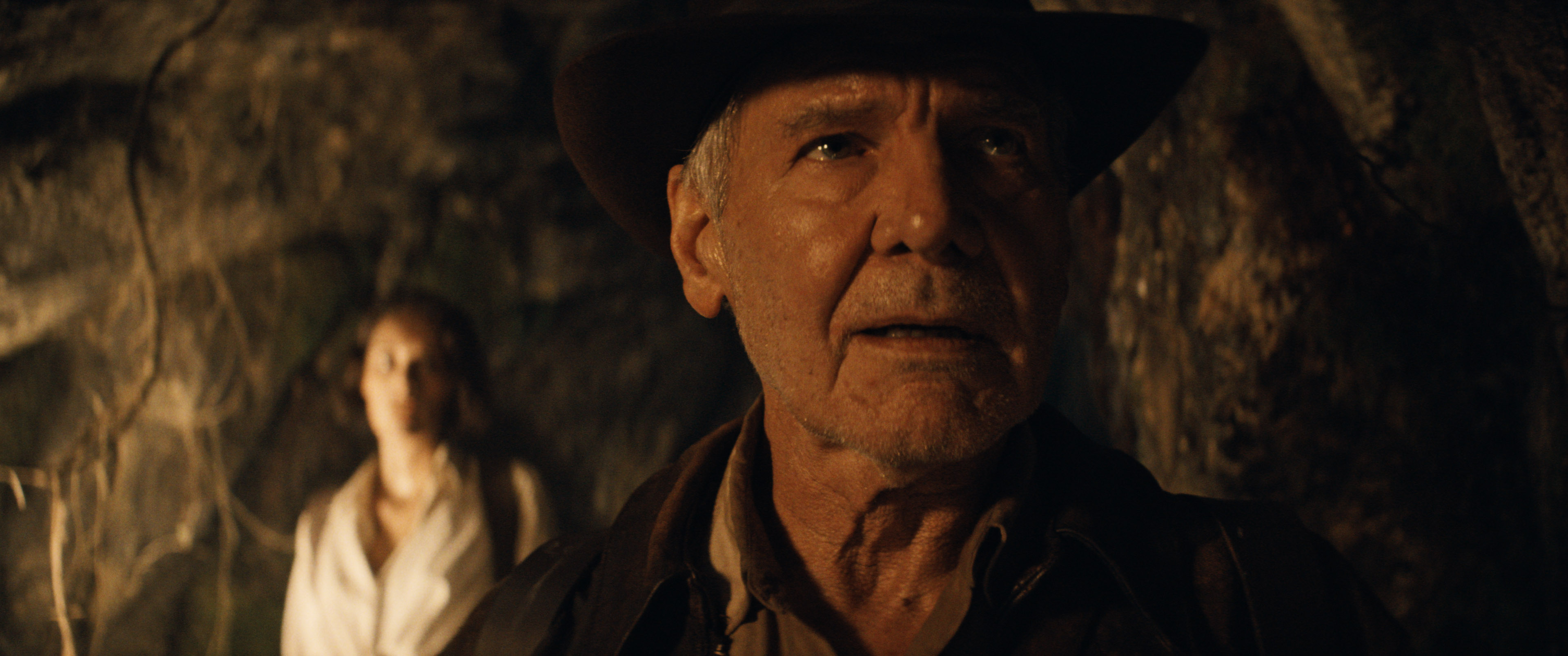
Indiana Jones and the Dial of Destiny opens exclusively in theatres on June 30th.
 The Joy of Movies