By John Corrado
★★★ (out of 4)
 Following her 2017 nun drama Novitiate, writer-director Maggie Betts takes a real life contract law case from the 1990s about the haves and have-nots in the world of funeral home owners, and crafts it into an entertaining legal drama in The Burial (which recently had its world premiere at TIFF).
The film is set in the mid-90s in Biloxi, Mississippi, where Jeremiah O’Keefe (Tommy Lee Jones) is the owner of a small chain of family-run funeral homes in the South. When O’Keefe finds himself needing to sell off part of the business in order to stay afloat, he accepts a handshake deal from Ray Loewen (Bill Camp).
Loewen is the Vancouver-based CEO of the Loewen Group, a big funeral home conglomerate looking to capitalize on what he calls a new “golden era of death” as aging boomers start to die. When months go by, and an actual contract is never drawn up, Jeremiah decides to take Loewen to court. It’s a case that O’Keefe can’t realistically win, but Hal Dockins (Mamoudou Athie), a young member of his legal counsel, thinks he has found a way in.
Sensing that they will be faced with a predominantly Black jury in the county where the case is being tried, Hal convinces Jeremiah to hire a prominent African-American lawyer by the name of Willie E. Gary (Jamie Foxx) to represent him. Willie is a slick personal injury lawyer from Florida who hasn’t lost a case in over a decade and speaks with the cadence of a Baptist preacher, treating the courtroom like a stage where he offers impassioned performances in defence of his clients. The one snag is that Gary has never dealt with contract law.
Based on Jonathan Harr’s New Yorker article of the same name, Betts wisely grounds her film version in the friendship that forms between O’Keefe and Gary, allowing it to serves as a showcase for both Jones and Foxx. These are two veteran actors with very well-known personalities, which the filmmaker taps into perfectly. She allows for natural elements of mismatched buddy comedy between the gruff Jones and the charismatic Foxx, as well as moments of deeper connection.
Foxx in particular delivers a real movie star performance as Mr. Gary. It’s a barn-burner supporting turn, as he showboats his way through court appearances (including a compelling early scene that unfolds as a single take as he paces back and forth in the courtroom delivering a fiery monologue), but the real impressive nature of his performance lies in the modulation between spouting verbal fireworks and quieter, more controlled moments.
The cast is rounded out by Alan Ruck as Jeremiah’s long-time lawyer and friend Mike Allred, who brings his own air of privilege to the case, and Jurnee Smollett as Mame Downes, the Black female lawyer that Loewen hires to represent him so as not to be outdone by Jeremiah’s calculated legal play. As the case progresses, and things become more heated, the film allows for several riveting exchanges between the members of its ensemble.
A trial involving a small funeral home being taken advantage of by a big conglomerate, and the legality around selling funeral insurance, could have made for potentially dry material. But Betts, who co-wrote the screenplay with Doug Wright, turns it into a surprising crowd-pleaser that examines the unexpected nuances of this case. As the film goes along and more complex layers are revealed, we start to realize what must have attracted Betts, who showed great skill in dealing with thorny, potentially salacious material in her aforementioned first narrative feature Novitiate, to this story.
What the trial is actually about becomes almost secondary to what it starts to be about, which is no less than a deeper history of racial discrimination and segregation in the American South. But this approach doesn’t feel like a bait-and-switch, instead keeping the film engaging as more wrinkles in the case come to light. The film also serves as a pretty scathing indictment of a hugely profitable, $20 billion a year “deathcare” industry that takes advantage of grieving families.
As a story of the little guy going against an unfeeling corporate behemoth, The Burial is able to deliver a number of very satisfying scenes, with Betts building rousing cinematic moments around the wins and losses of the case (including some R&B needle-drops). More so than being a film about funeral homes, The Burial has the feel of an old school courtroom drama, right down to its respectable production design and Maryse Alberti’s polished cinematography. But it mainly all works thanks to a pair of complimentary performances from Jones and Foxx, whom Betts fully trusts to carry her film.
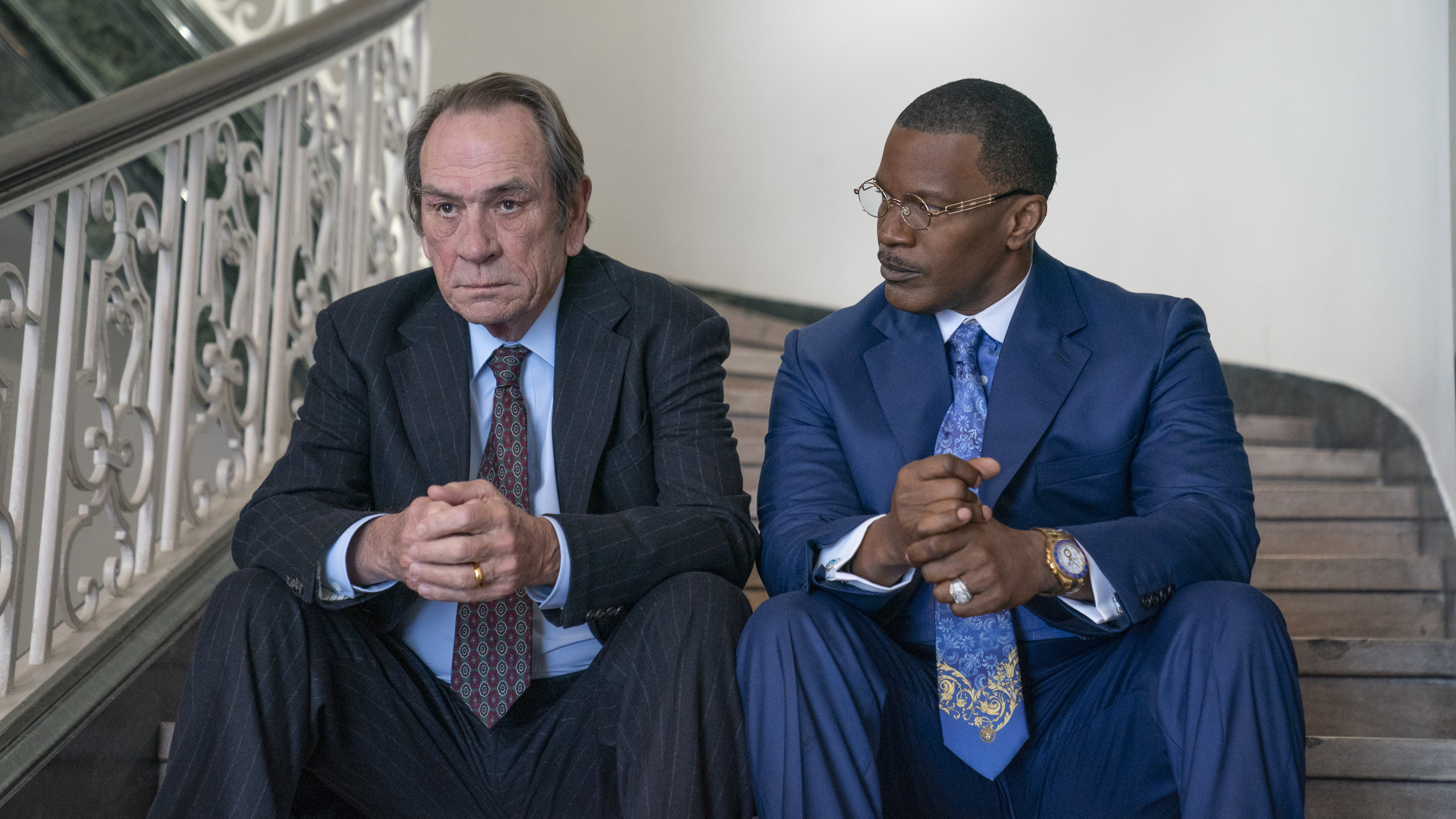
The Burial is available to stream exclusively on Prime Video as of October 13th.
 The Joy of Movies