By John Corrado
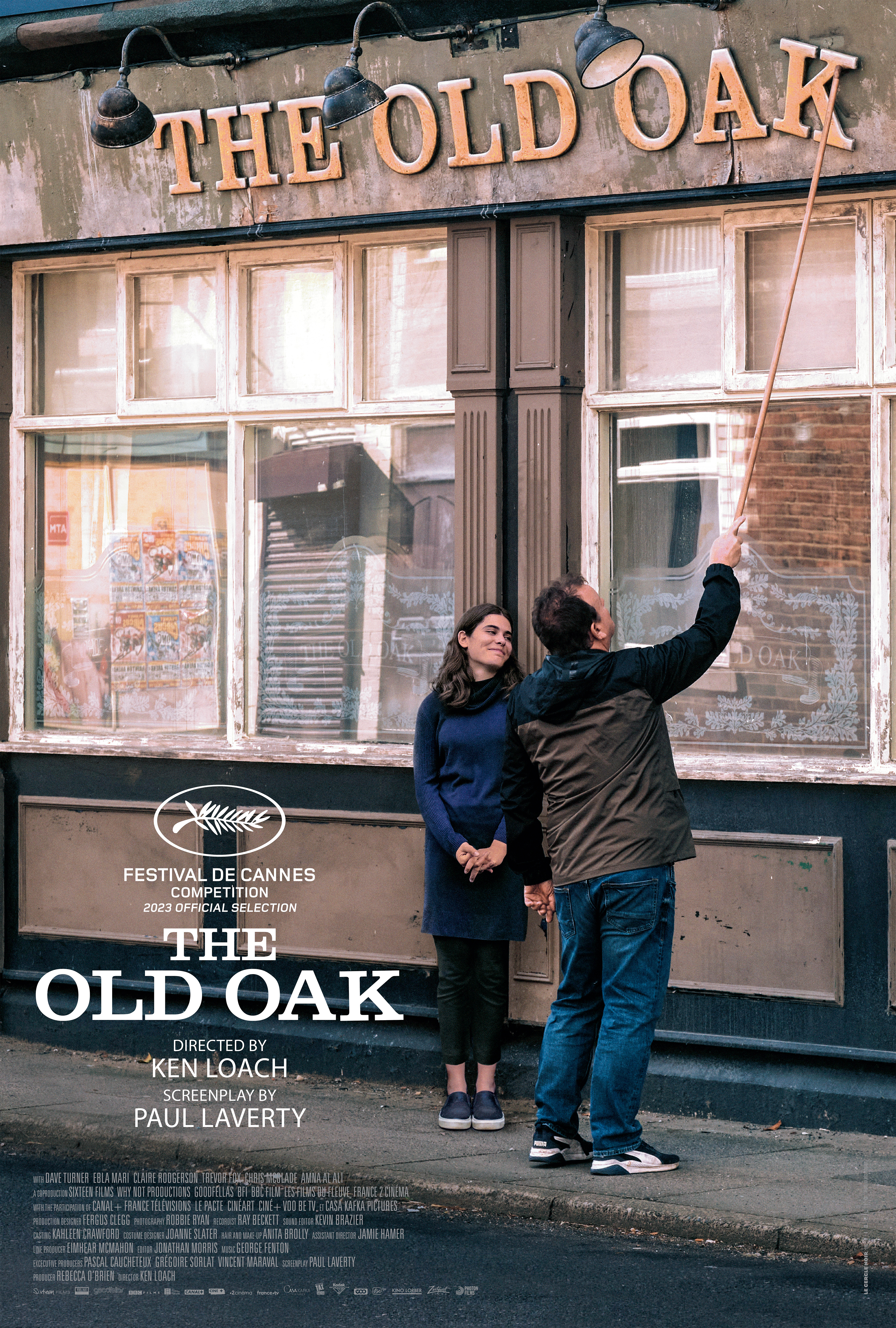 The latest and possibly final film from British director Ken Loach, The Old Oak is another poignant social realist drama exploring themes of unrest in modern England, this time centred around the migrant crisis.
Done in his usual neorealist style, the film focuses on the clash between a group of Syrian immigrants who are dropped off by bus in the middle of a forgotten mining town in North East England, and the working class denizens of the rundown local pub at the centre of town that gives the film its title.
TJ Ballantyne (Dave Turner) is the owner of The Old Oak, which serves as the watering hole for the local union men and women, who gather there in the afternoons to have a pint and air their grievances about the newcomers in town.
The film opens with a series of still photographs showing the locals protesting the arrival of these immigrants, as their skirmish plays out on the soundtrack. The photographs are being taken by Yara (Ebla Mari), a young woman who has come from war-torn Syria with her mother and siblings, and is documenting the less-than-kind greeting that her family receives getting off the bus.
TJ helps Yara, who is unsure if her father is still alive back home, and does his best to support her through the conflict. But when he starts to open up the pub to the refugee families, the divide deepens with the locals who remind him that they are the ones keeping him in business. Loach acknowledges the inherent knottiness of their resentment; yes, their reactions to the newcomers often bleed into bigotry and xenophobia, but it’s rooted in the feeling that they themselves have been left behind, with their properties devalued and dim financial prospects.
In one scene, TJ helps his friend Laura (Claire Rodgerson) deliver aid packages to the Syrian families, including dropping off a used bike for one girl. He encounters a group of local boys who question why they don’t get delivered bikes. “They came here with nothing,” TJ reminds them, but he also wonders why they aren’t doing more to help their own. When Yara sees photos from TJ’s union days, when the whole town would come together to share meals and fight for the miners, she recognizes some similarities in their struggles.
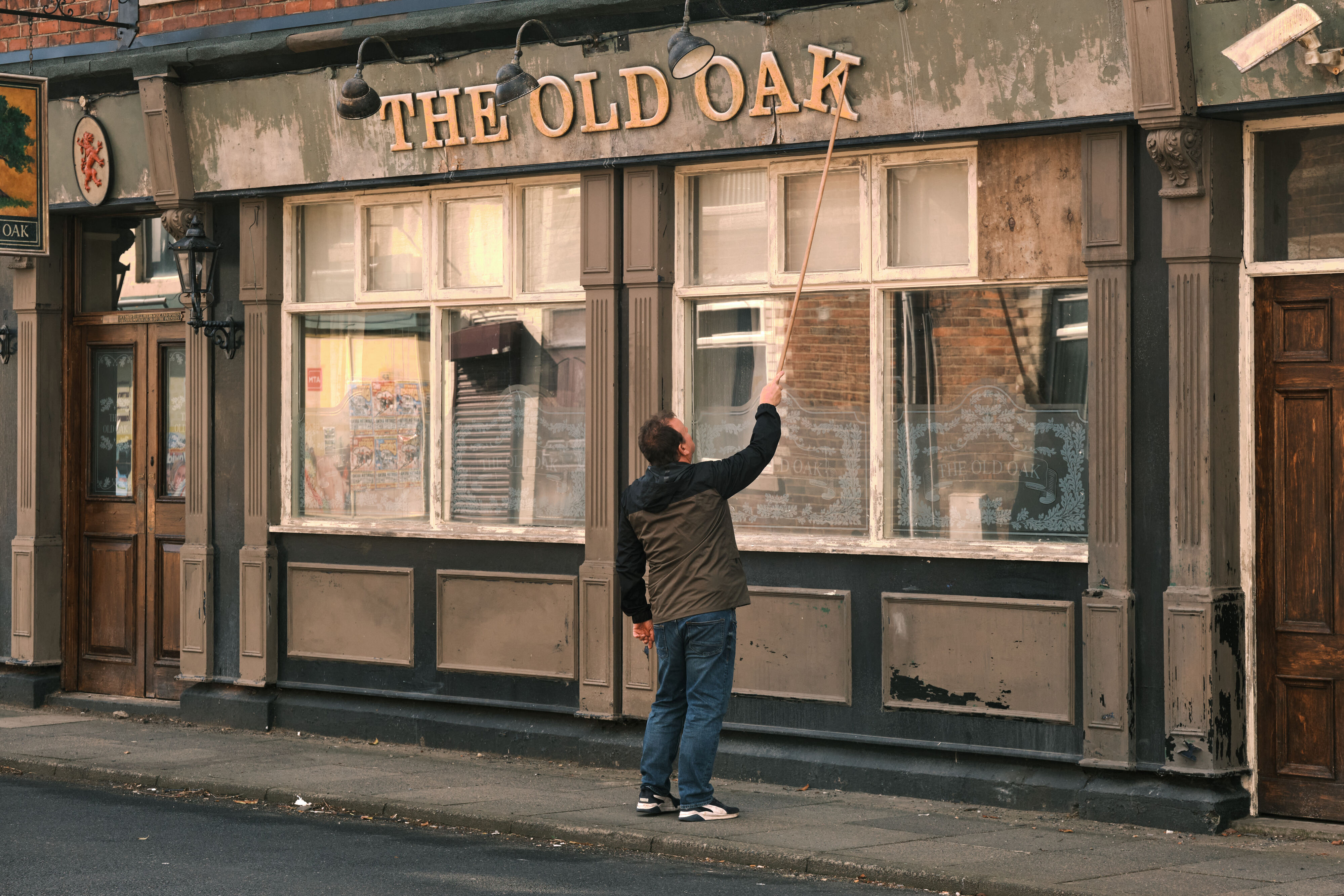
The messages and themes can feel a bit broad (the tilting letter “K” above the pub that falls again when TJ tries to fix it serves as an obvious metaphor of the town’s decline), and the film lacks some subtlety in its dialogue and somewhat predictable outcome. But The Old Oak works as a sincere feel-good tale about people from different backgrounds coming together, with the screenplay by frequent Loach collaborator Paul Laverty built around the bond that forms between TJ and Yara.
Loach has a deft hand at crafting these heartfelt character moments, finding drama and connection in the plight of the common man (and woman). If The Old Oak lacks some of the sheer power of Loach’s 2016 Palme d’Or winner I, Daniel Blake, it’s a fitting and touching swan song for a filmmaker who has devoted the latter stages of his career to documenting the struggles of the working class.
Film Rating: ★★★ (out of 4)
The Old Oak opens exclusively in theatres in limited release on April 5th. It’s being distributed in Canada by Photon Films.
 The Joy of Movies