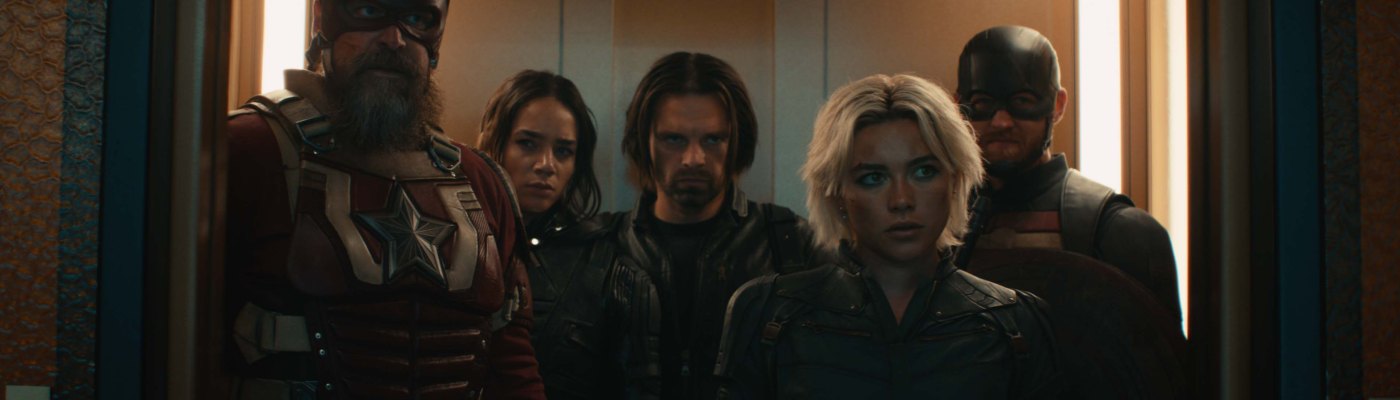
By John Corrado
 Marvel’s Thunderbolts* (that asterisk is actually important) is the latest piece of the Marvel Cinematic Universe, and it breathes new life into the franchise by largely going back to basics.
Despite being the 36th film in the MCU (not to mention all of the Disney Plus streaming series that have gone along with it), director Jake Schreier’s Thunderbolts* puts the focus on characters first and foremost, and hones in on the granules of assembling a team that is able to work together.
While this is still part of something massive, in many ways it feels more like old school Marvel. The film finds a new group of misfits being assembled in the absence of the Avengers. It works so well because it’s grounded in the relationships between these characters, and not just setting up or hinting at the next big thing to come in the franchise (though it obviously does a little of that as well).
This is also Marvel’s first movie explicitly about depression and mental illness. I don’t say that to sound flippant, but rather because it is maybe the defining aspect of Schreier’s film that makes it stand out. Schreier is better known as the director of films like Robot & Frank and Paper Towns, as well as for the Netflix series Beef, so he’s not coming from a comic book background. This means he is more interested in exploring topics like loneliness, and the unvarnished side of being a superhero.
It works because these aren’t really superheroes. This is essentially Marvel’s version of DC’s Suicide Squad, the B-team of anti-heroes who’ve reached a point where they don’t even really care if they live or die. Case in point, the film opens on Yelena Belova (Florence Pugh), who has become depressed by the drudgery of her daily routine as a for-hire assassin working under the direction of Valentina Allegra de Fontaine (Julia Louis-Dreyfus).
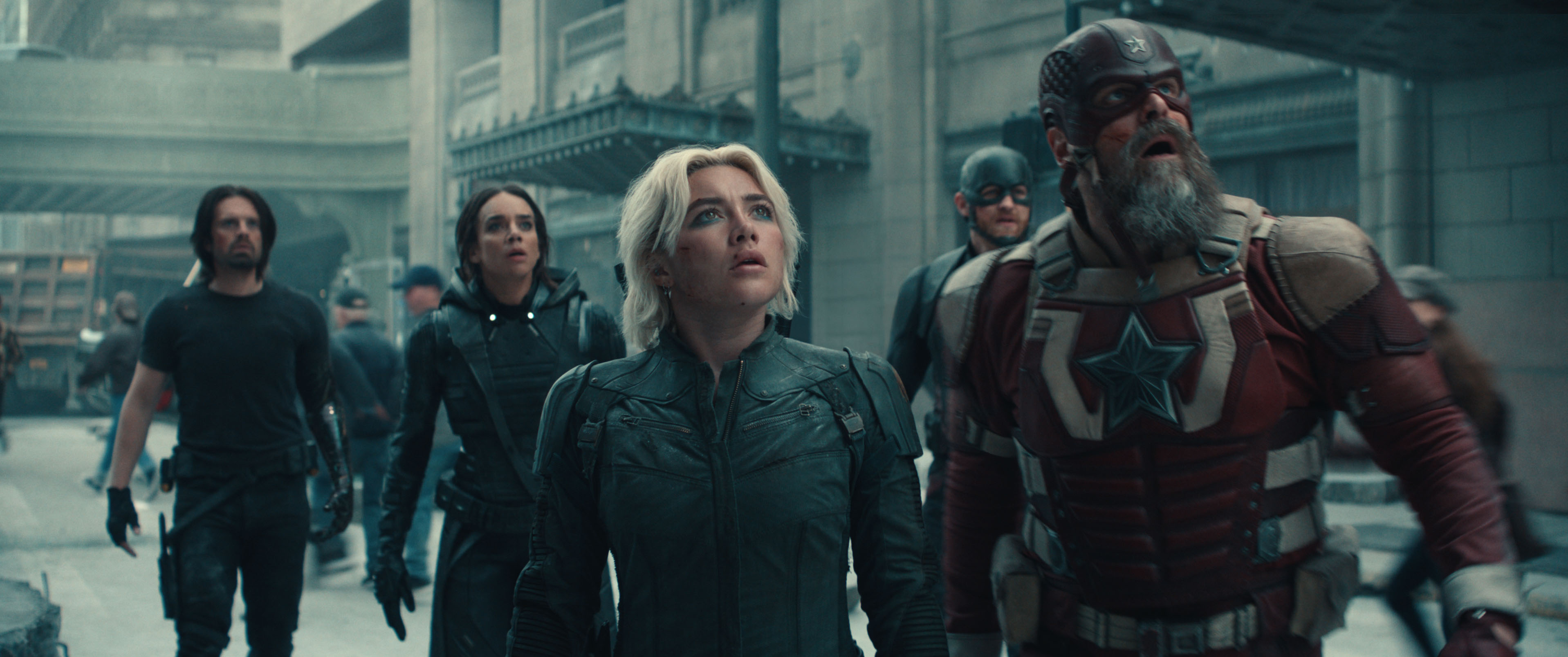
When Yelena stumbles back into the home of her father figure Red Guardian (David Harbour), the two haven’t even spoken in a year. The “team” that Yelena and Red Guardian are a part of is more a group of misfits, and they aren’t “assembled” as much as they are thrown together by CIA director Valentina, who is trying to clean up loose ends. The other members include Bucky Barnes (Sebastian Stan), John Walker (Wyatt Russell), Taskmaster (Olga Kurylenko), Ghost (Hannah John-Kamen), and Bob (Lewis Pullman), a bipolar amnesiac who struggles to remember where he came from.
In many ways, Thunderbolts* feels like a bit of a course correction from MCU producer Kevin Feige, who has surely heeded the warnings of critics and audiences who have been signalling some fatigue with this franchise. For starters, Schreier somewhat does away with the overly polished TV aesthetic, in favour of something a little grittier. This film works because it is grounded again in the interplay between the characters, and focused on our ragtag group finding ways to work together. There is an element of political thriller here, too.
The film builds on things from previous movies like Black Widow (and the streaming series The Falcon and the Winter Soldier), but still somewhat stands on its own, largely setting up its own story. Again, the reason why Thunderbolts* works so well is because Schreier puts the focus on the characters first and foremost. As such, the set-pieces are all built around these disparate, depressed-in-their-own-ways characters needing to find a dynamic that works between them, while also each working through their own internal issues.
Schreier’s film works because it has genuine heart; the climax serves as an emotional payoff, as much as it is an exciting, action-driven one. These are characters dealing with traumatic things from their past, and they are allowed to be vulnerable. This is also what happens when you put an actress of Pugh’s calibre at the centre of one of these, and give her the space to deliver a layered performance, one with genuine depth and character development. Pullman also does a lot of the heavy lifting, and is given a compelling, surprisingly resonant arc as the troubled, mysterious Bob.
What’s even more surprising is that the film offers an accurate depiction of depression, and the tools and support systems that are effective at mitigating the impacts of it. There’s this recurring theme about burying our feelings versus letting them rise to the surface to actually work through them, and it’s refreshing for any blockbuster to broach these subjects. The result is Marvel’s best since Guardians of the Galaxy Vol. 3, and it shares some common DNA with those wonderful Guardians movies as well.
It’s still fast-paced and entertaining, of course, nailing a lot of the banter and fun interplay that we expect, which automatically puts it in the upper echelon of the series. But Thunderbolts* soars because it is able to deliver an emotional impact as well. It’s a Marvel movie that the audience can relate to on a surprisingly deep personal level, and will maybe even do some good in the world.
Film Rating: ★★★½ (out of 4)
 The Joy of Movies