By John Corrado
Poetic License is the delightful directorial debut of Maude Apatow, best known as an actress on Euphoria and in her father Judd Apatow’s films. Working from a perceptive screenplay by Raffi Donatich, the younger Apatow’s behind-the-camera debut is confident and funny, while also exploring the complexities of friendship.
The film feels like a family affair, with Maude’s father getting a producing credit, and her mom Leslie Mann starring in the film. Mann plays Liz, a former therapist who has just moved from Chicago to a quiet college town so her professor husband James (Cliff “Method Man” Smith) can teach economics at the university. Their daughter Dora (Nico Parker) is in her last year of high school, and now starting over at a new school.
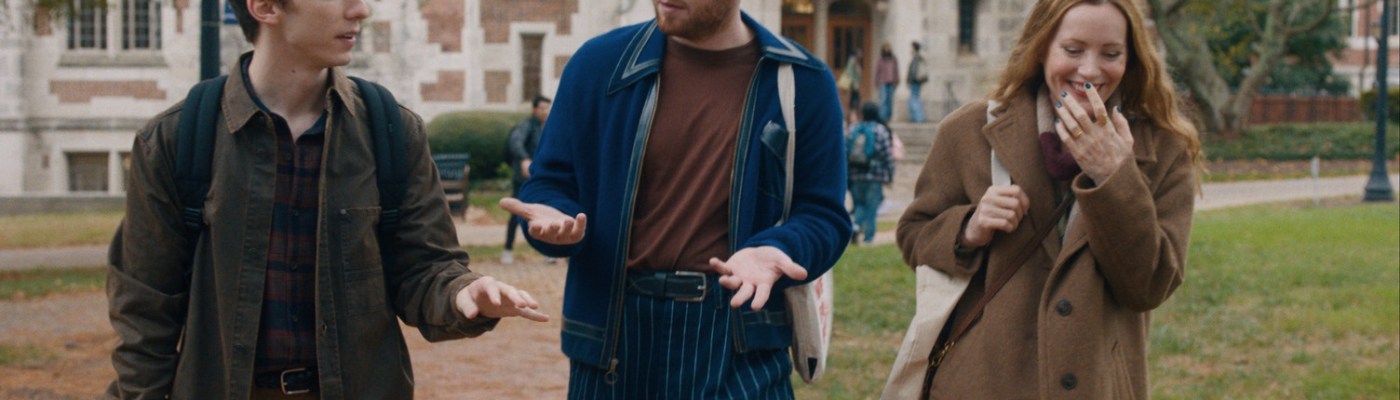
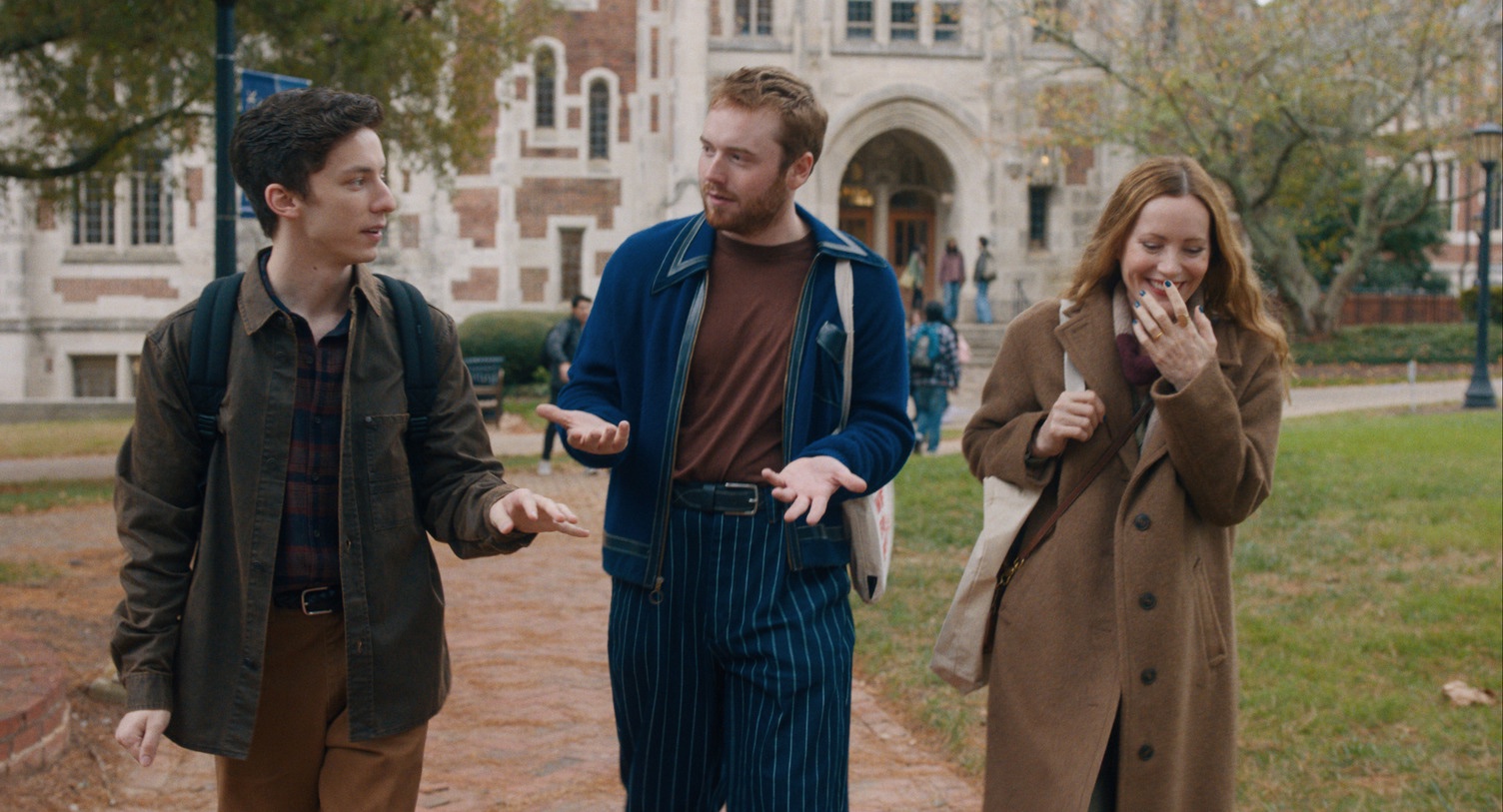
In her spare time, and desperate for something to do, Liz decides to audit a poetry class at the university. It’s here that she meets Ari (Cooper Hoffman) and Sam (Andrew Barth Feldman), two best friends and college seniors who welcome her into their study group. While Ari is a hyperactive dreamer already seemingly adrift in life, and Sam is a nervous, strait-laced kid circling a career in finance, the two are inseparable.
The boys become enamoured with Liz. They are subconsciously seeking a maternal figure, but view her as something more. She wants friends to make her feel young again, feeling like she is losing out on getting to spend time with her daughter. Feelings develop, and things get messy and complicated. This is a premise that could’ve fallen apart. But Apatow and Donatich have enough empathy for all of their characters that the film maintains a warmth to it.
As the precocious, motormouthed, hypomanic Ari, Hoffman is an instantly magnetic screen presence. Feldman builds off the anxious puppy energy that he showed in No Hard Feelings as Sam. The way the two bounce off each other is so much fun to watch, with Donatich affording them plenty of spitfire dialogue. There’s a nicely underplayed hint of homoeroticism underlying their friendship (early on, Sam asks Ari if he even likes women due to his lack of a girlfriend, to which he simply responds “under the right circumstances”).
Maude also directs her mom Leslie Mann to one of her best performances as Liz, an empathetic if slightly neurotic character who really just wants to feel a sense of purpose. We understand why the boys would compete for both her approval and company. The film also tenderly explores a mother-daughter relationship, material that obviously feels like it hits close to home for the filmmaker and actress.
Apatow’s film shares some common DNA with her father’s films, but by way of Nicole Holofcener. It’s a character-driven comedy, with characters that we really enjoy spending a few hours with, and a trio of memorable performances.
 The Joy of Movies