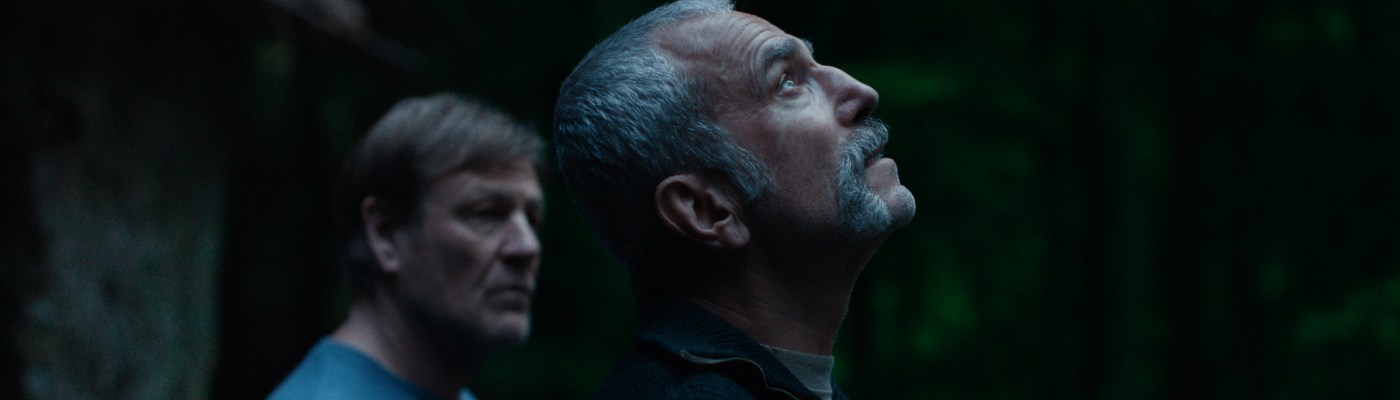
By John Corrado
 Anemone, the feature directorial debut of Ronan Day-Lewis, is notable for bringing the filmmaker’s father, actor Daniel Day-Lewis, out of retirement. This is his first acting role since starring in Paul Thomas Anderson’s Phantom Thread, a film that has only grown in stature in the near-decade since it was released.
This already puts a lot of pressure on Anemone, which Ronan and Daniel also co-wrote together, with the thrice Oscar-winning actor making his long-awaited return to the screen after abruptly stepping away from acting in 2017. The actor didn’t provide many details at the time (it was not even his first retirement announcement), but perhaps the infamous intensity of his method acting became too much.
That intensity is on display throughout Anemone, a dark family drama that makes its bleakness a feature, not a bug. The gloomy setting, and the way its characters dance around addressing past traumas that are obviously there like a dark cloud hanging over them, all add to the brooding nature of the film, which serves as a strong showcase for Day-Lewis.
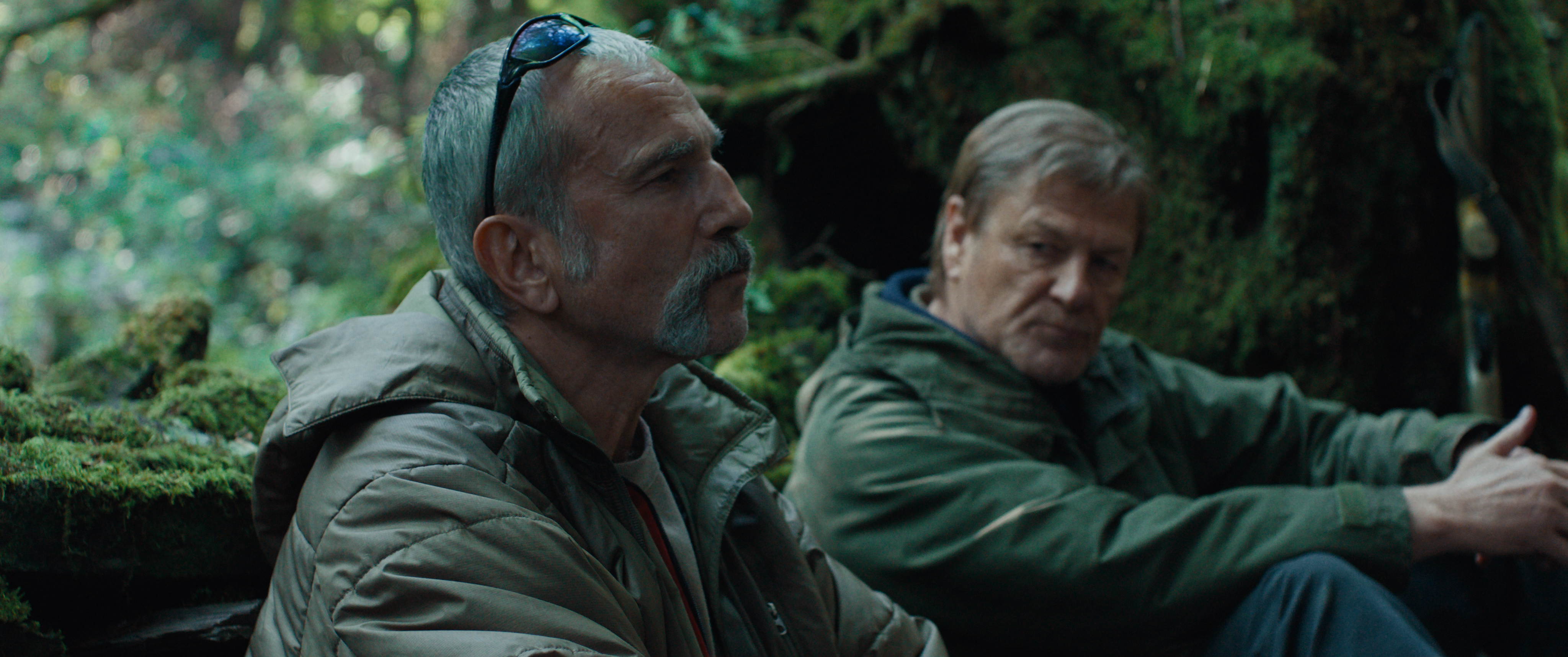
Day-Lewis’s performance here might not be as outwardly showy as his Abraham Lincoln in Lincoln or Daniel Plainview in There Will Be Blood, but his Ray Stoker in Anemone is an enigma all his own. Ray is a man who has been living secluded in the woods, shut off from society. He chops wood, hunts, lives off homemade stew, and gives the impression of someone who has given up talking because he has no one to talk to. But this isolation, we sense, is entirely by his own design.
At the start of the film, Ray’s brother Jem (Sean Bean) goes to visit him. He hides his motorcycle in the woods, and pulls out a piece of paper with coordinates, showing us just how isolated and hidden his brother has been. Ray has completely cut himself off from the rest of the world, and perhaps Jem has gone to coax him back into it. Jem lives in Northern England with his wife Nessa (Samantha Morton) and teenage son Brian (Samuel Bottomley).
This visit to his brother might have to do with unanswered questions about their familial past, with Jem seeking either answers or closure. His own son is starting to show some troubling signs. There is an approaching storm on the horizon, which adds a foreboding layer to the narrative, both figuratively and literally. The film features dark, heavy symbolism throughout, as well as some dreamlike images that approach magical realism.
The performances are what keep us intrigued, with several lengthy, brooding monologues delivered in closeups. As a directorial debut for Ronan Day-Lewis, Anemone mainly feels crafted as a showcase for his father, providing a way out of retirement for his dad as an actor. This might be a stripped down character drama, but we still get hints of his full-bodied method acting. There is a subtle physicality to his performance as well, right down to the way he tosses a teaspoon onto the table, with his short silver hair and handlebar moustache becoming a part of the character.
The elder Day-Lewis brings his signature intensity to every line reading, including an absurdly compelling monologue involving defecation and an abusive priest, delivered in a way that keeps us hooked on every word as Ray recounts the startling tale to Jem. Bean, impressively, holds his own against this legendary screen presence, especially in moments when the brothers go head to head.
As a director, Ronan Day-Lewis shows some impressive formal restraint. The film makes use of sounds as well as silences, holding on images but also utilizing some hard cuts. The grandeur of Ben Fordesman’s widescreen cinematography gives it a mythic, almost fairy tale-like quality. The closeups allow us to study the creases in the faces of the leads, but the wide shots are equally evocative, such as a long tracking shot following characters running along the beach.
The film itself mainly serves as a slow-burn character drama that carefully teases out plot details. At times it feels a little too vague in its meaning or intentions, at least at first. But the deeper themes of fathers and sons, the tenuous bond between brothers, and generational cycles of violence, eventually come to the forefront in a powerful way. Mainly thanks to the riveting work of Daniel Day-Lewis.
Film Rating: ★★★ (out of 4)
 The Joy of Movies