By John Corrado
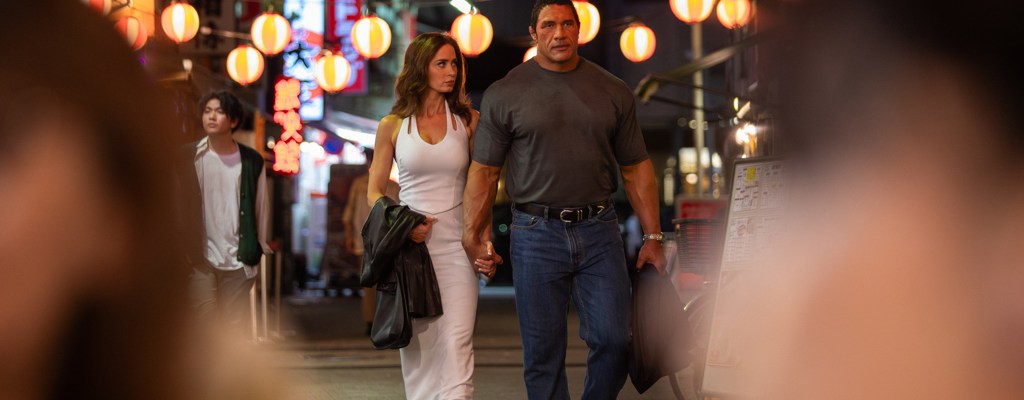
 Dwayne “The Rock” Johnson stars in The Smashing Machine, a very good biopic of early UFC fighter Mark Kerr, that finds the wrestler-turned-actor giving it his all in his first big, meaty dramatic role.
The film, which also serves as the first solo outing of director Benny Safdie, after splitting from his brother Josh following Uncut Gems and Good Time, is adapted from a 2002 documentary of the same name.
As such, Safdie takes a documentary-like approach to telling Kerr’s story in The Smashing Machine, with scenes having a fly-on-the-wall feel. The film is ostensibly a biopic of Mark Kerr, but it’s presented more in the style of docudrama, with Safdie finding his own rhythm across the at times unconventionally paced two hour running time.
An opening title card tells us that it is based on events that happened between 1997 and 2000. Maceo Bishop’s gritty, handheld 16mm cinematography (which looked shockingly great presented in IMAX at my press screening) really adds to the aesthetic and authenticity of the storytelling.
As much as this is a wrestling movie that offers a portrait of the early days of UFC, it’s also domestic drama. Safdie is more interested in using Johnson’s Kerr as a conduit to explore the idea of winning as a sort of drug, forcing you to push your body past the breaking point. The film features the fight scenes and comeback narrative that you want from a good sports movie. But it’s as much about him struggling with sobriety after abusing prescription painkillers, required after his injuries in the ring.
The role allows Johnson to credibly transition away from the comedies and blockbusters that played into his “Rock” persona, and step into playing a character that strips away some of his own movie star facade. This career reinvention was perhaps a necessity after Black Adam flopped, but his role in The Smashing Machine is no mere stunt casting. It’s easy to admire the amount of care and attention that he put into the portrayal, which is evident throughout.
Johnson is fully committed to this role, whether emoting in closeups or modulating his voice to sound more like the real Kerr. It’s a genuinely strong dramatic performance. There are also prosthetics on his face that subtly change his appearance. We can tell there’s something different, but can’t quite put our finger on it, speaking to how good of a job the makeup team did in turning him into Kerr.
The other big performance here is from Emily Blunt as Kerr’s romantic partner Dawn Staples. It’s depicted as an occasionally volatile, on-again, off-again relationship, leading to one of the most powerful sequences in the second half. Blunt is doing excellent work here, completely believable as the firebrand American girlfriend, and complimenting Johnson in their scenes together.

 The Joy of Movies