
By John Corrado
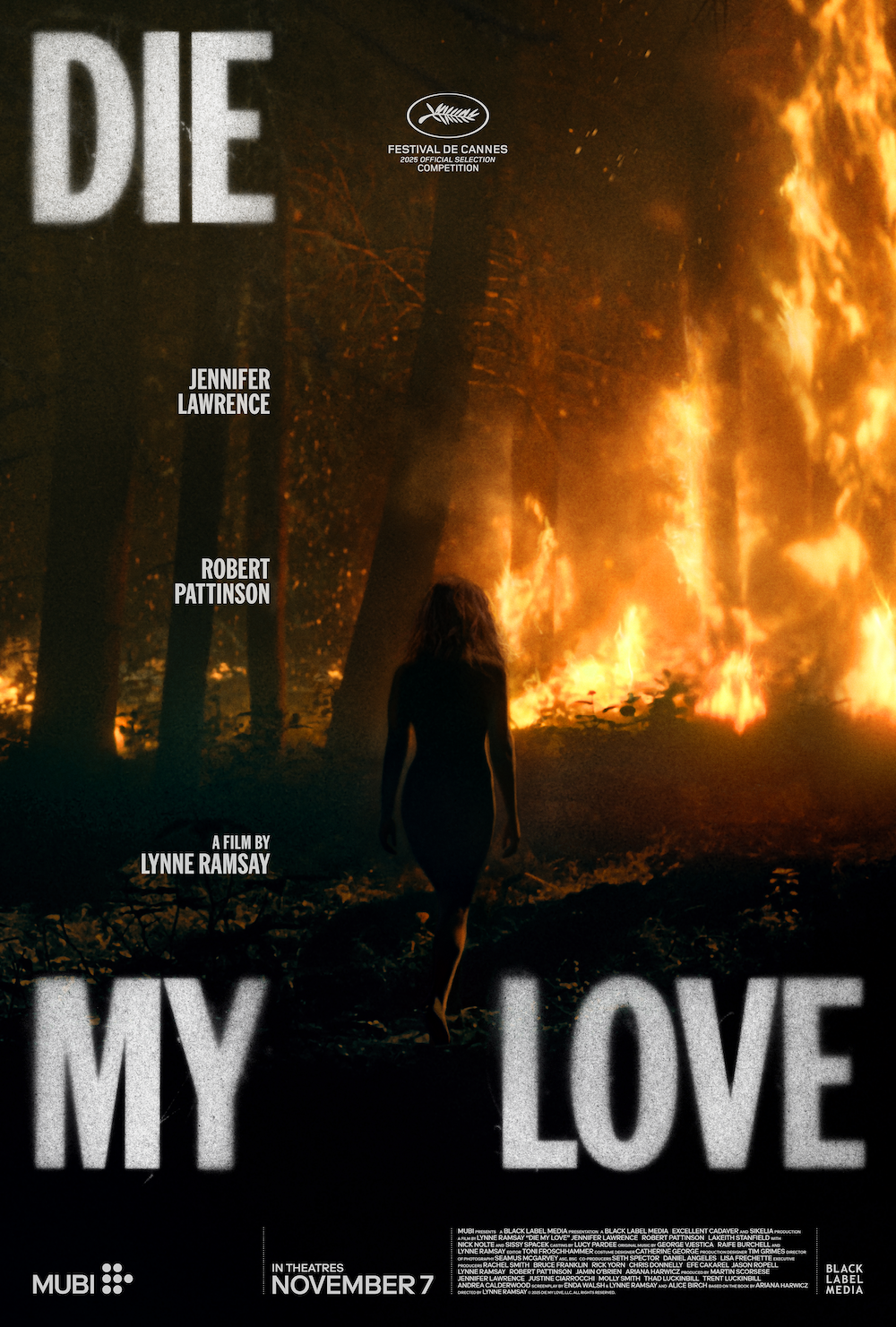 It’s funny that, in the decade since the blockbuster YA franchises that made them both movie stars wrapped up, the long-awaited big screen pairing of Hunger Games star Jennifer Lawrence and Twilight’s Robert Pattinson, is an arthouse movie.
It speaks to the genuine credibility they have both built for themselves within the industry as serious actors that the J-Law and R-Patz movie is also the latest work from Lynne Ramsay; a director known for her dark, psychological character studies, who hasn’t released a movie since 2017’s Joaquin Phoenix thriller You Were Never Really Here.
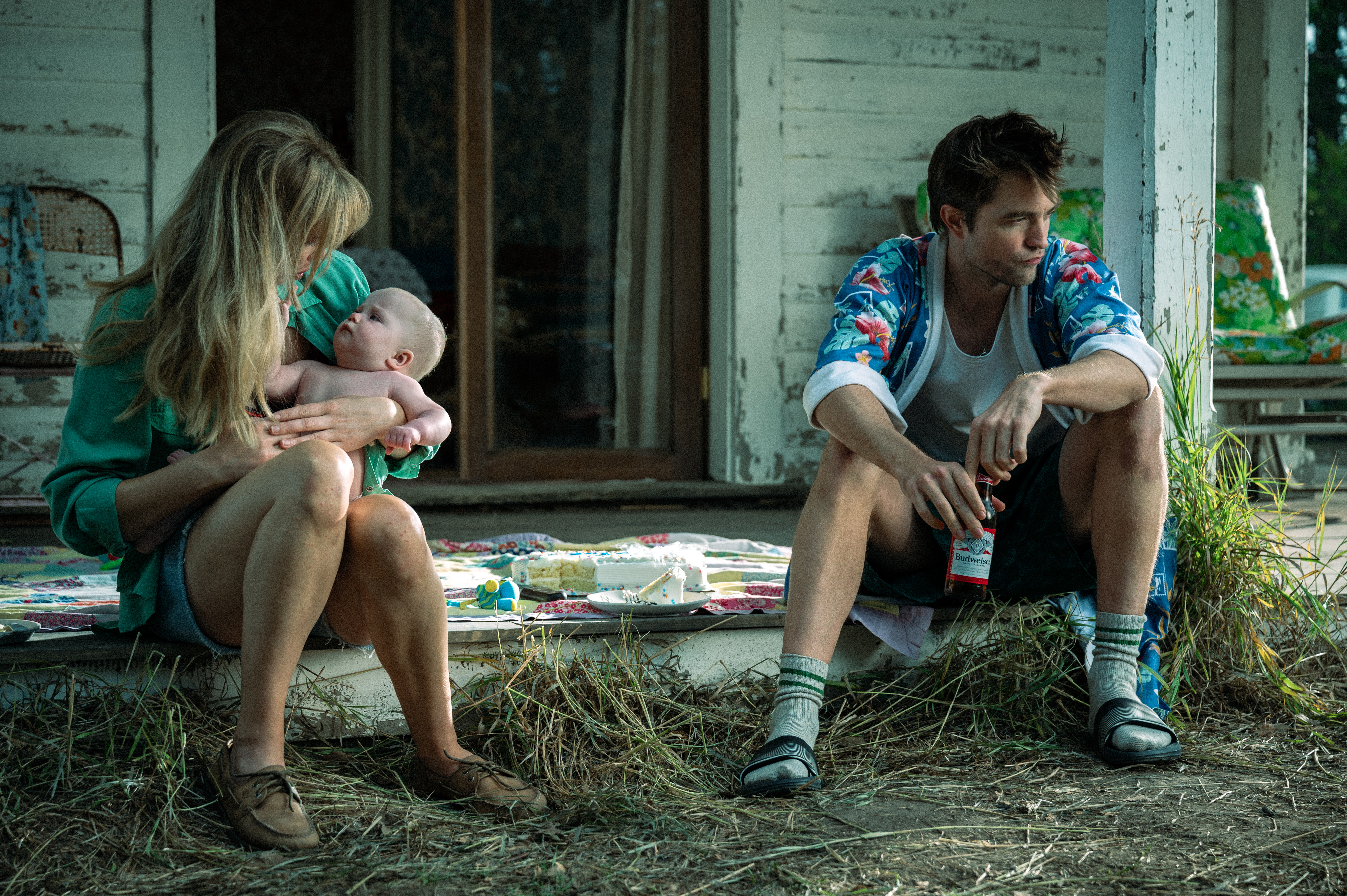
In Ramsay’s Die My Love, which is based on a novel by Ariana Harwicz, Lawrence stars as Grace. Grace is a young writer who moves to rural Montana with her partner Jackson (Robert Pattinson), in a house that he has inherited from a dead relative. She has aspirations of not only writing a novel, but the next great American one.
Grace and Jackson soon have a baby boy, which consumes most of her time. Especially since she is left navigating motherhood largely on her own, while Jackson is often away on long work trips. The closest support she has comes from his mother Pam (Sissy Spacek) and father Harry (Nick Nolte), who has dementia. Grace is also increasingly repressed and frustrated by the fact that her and Jackson, who enjoyed an extremely physical (read “horny”) relationship that we see in the early scenes, have all but stopped having sex.
Those expecting a more conventional look at the woes of motherhood and postpartum depression likely aren’t familiar with Ramsay’s previous work or uncompromising, unflinching style. Ramsay’s flowing, dreamlike approach has hints of Terrence Malick, but with a sinister, perverted edge. She presents this all as a woozy descent into madness, laced with elements of surrealism and extremely dark comedy (in a similar vein to the early works of Yorgos Lanthimos like Dogtooth).
Ramsay’s film basically lets us watch Grace slowly going mad as she is left alone in that house with a baby and a yapping dog, which Jackson brings home against her wishes and expects her to look after. She is experiencing hypomania and psychosis that goes beyond just isolation and parenthood, and Ramsay’s goal is essentially to put us inside her head and fraying mental state, something that the filmmaker also did so well in her 2011 film We Need to Talk About Kevin.
At the centre of it all is Lawrence, who delivers nothing short of an acting tour de force here. There is an intuitive, instinctual quality to her performance. Her character does bizarre, sometimes shocking things, but Lawrence imbues them with the casual quality of someone losing touch with reality. She takes a sip of beer and spouts it from her mouth onto the kitchen floor. When the dog starts barking, she gets down on all fours and yaps back. She casually takes her clothes off at inappropriate times, or engages in self-injurious behaviour. There is an intentionally abrasive quality to her character, including some disturbing choices that she makes.
It’s a performance that has Lawrence baring all, both emotionally and physically (quite literally at times with the amount of full-body nudity). There are animalistic qualities to her portrayal, especially when Grace and Jackson are crawling around in the grass like big cats as a sort of foreplay, while still feeling grounded as a portrayal of a young mother experiencing a mental breakdown. It’s a fascinating and believable portrait of mental illness, which is perhaps being overlooked by others as just quirkiness or over-tiredness from being a new mother.
In portraying both sides of an often volatile relationship, Lawrence and Pattinson have incredibly strong chemistry together. Pattinson finds the balance between showing Jackson growing tired of his wife’s antics and needing his own space, while also trying to support her. The two invariably end up lashing out at each other, and both actors make it thrilling to watch these scenes. It also speaks to their exceptional instincts as performers that montages of them crawling around and acting strange are so compelling to observe.
If their performances are what guides the film, Ramsay’s bold aesthetic and narrative choices add to the experience. The disjointed story structure, and Toni Froschhammer’s editing, intentionally make us lose track of time. Seamus McGarvey’s exceptional cinematography frames everything within a boxy 4:3 aspect ratio, as the production design and colour palette evokes the feel of a hot, sticky summer.
The sound design purposely heightens every irritating background noise, from buzzing flies to the barking dog. The quiet, unassuming stillness of the rural setting (it was shot in Alberta, standing in for Montana), which allows these insect and animal noises to become even more oppressively loud, makes it all the eerier. The film’s soundscape is punctuated by scratchy needle drops, that include ironic uses of classic children’s songs.
The whole thing is meant to disorient us, and mimic the experience of a character slipping off the deep end. Interestingly, the film arrives in theatres at the same time as If I Had Legs I’d Kick You, another movie about a mother buckling under pressure and losing her grip on reality. In their own ways, both movies offer sensory overload in their startling portraits of postpartum mental health. But Ramsay’s film plays like a more stripped down, arthouse version of it.
As a psychological portrait, Die My Love is provocative and gripping cinema. It also offers the unique opportunity to watch two of this generation’s finest and most interesting young actors, who both got their start in YA franchises, finally sharing the screen together, in a collaboration that is just as rewarding as we could’ve hoped for.
 The Joy of Movies