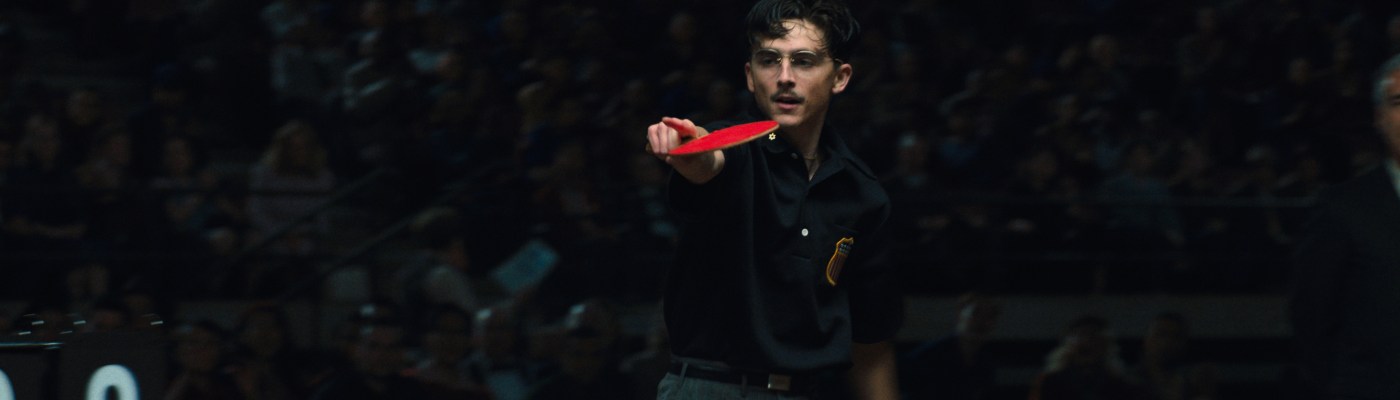
By John Corrado
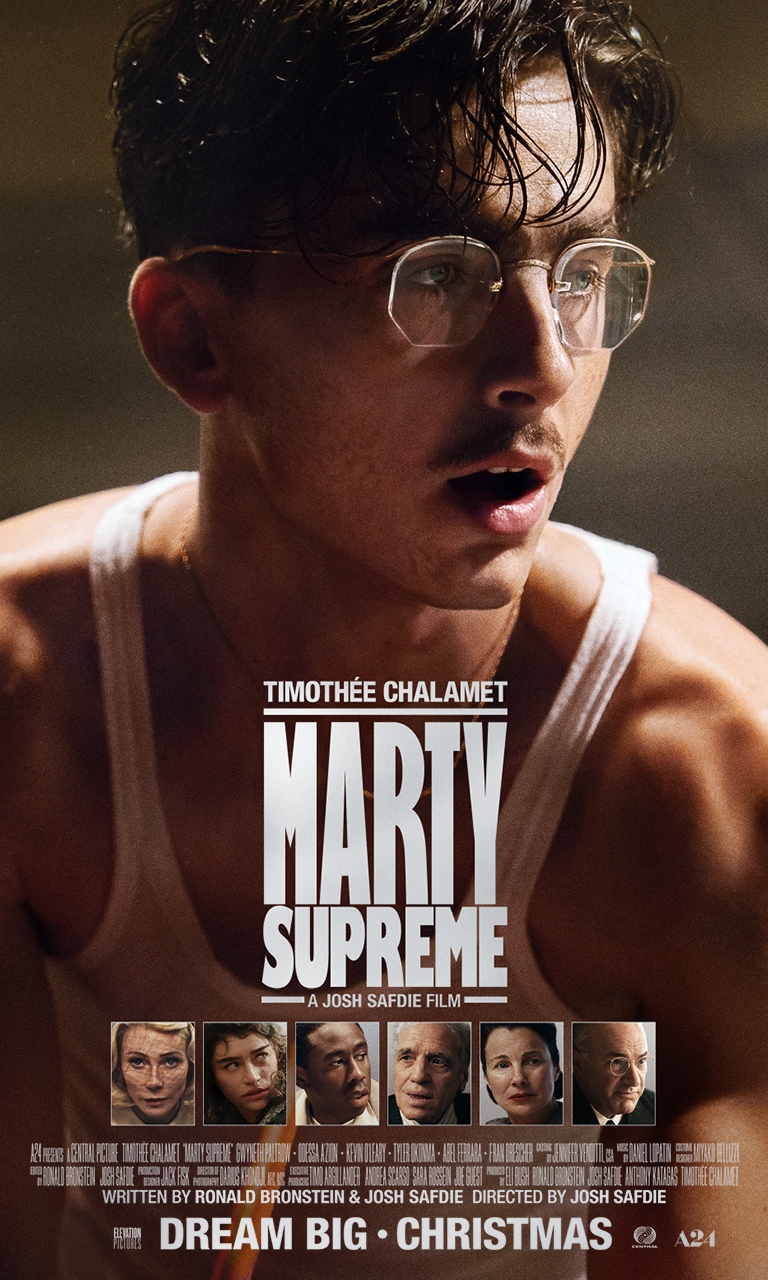 In his acceptance speech at the SAG Awards earlier year, when he won the Best Actor trophy for his uncanny portrayal of Bob Dylan in music biopic A Complete Unknown, Timothée Chalamet unabashedly spoke about wanting to be one of the greats.
The young actor took some heat for it online. Surely he should’ve been more gracious and humble in accepting an award from his peers, some critics alleged. But I found it refreshing. Chalamet’s argument – and his entire point – was that we accept athletes openly talking about wanting to be the best at what they do, so why not actors?
After all, confidence does not necessarily equal arrogance when backed up by actual talent, which in Chalamet’s case is generational. This all brings us to director Josh Safdie’s Marty Supreme, an insane ride of a film that presents the role of a lifetime for the young actor, and makes his speech seem almost meta in retrospect. It’s fitting now that Chalamet has spoken so openly about wanting to reach greatness, because that confidence and aspirational strive to be the best carries through to his character here as well.
It turns out that, while he was learning to play the guitar and sing like Dylan, Chalamet was also learning how to play professional ping pong to take on the role of Marty Mauser, a colourful real life figure who believed in the sport of table tennis early on. As Mauser, Chalamet delivers the kind of manic, fully committed performance that is not only endlessly watchable but also career-defining. This is the sort of role that has Chalamet putting it all onscreen, leaving no doubt that he is, in fact, one of the best of his generation.
The film serves as Josh Safdie’s solo debut, breaking from his brother Benny following their high profile collaborations Uncut Gems and Good Time (it’s being released nearly in tandem with Benny’s own solo debut The Smashing Machine, also a sports biopic from A24). But it fully indicates that Josh is the one who brought that twitchy, anxiety-inducing energy to those works, with Chalamet bringing the same squirrelly intensity to this role that Adam Sandler and Robert Pattinson brought to their kindred roles in those respective films.
The film is predominantly set in New York City in the 1950s. We are introduced to Marty as a shoe salesman in his mid-20s. He’s a natural born salesman but dreams of greater things, preparing for a ping pong tournament in England, where he has the opportunity to go up against Japan’s star player Koto Endo (Koto Kawaguchi). The sport is already big in Asia, and Marty sees it as only a matter of time before it takes off stateside, trying to position himself as the American face of it.
But this is no conventional sports movie or biopic. A series of obstacles – many of his own making – stand in his way. This includes a pair of love affairs, starting with his neighbour and childhood friend Rachel Mizler (Odessa A’zion), who is stuck in a not good marriage to Ira (Emory Cohen). Then there’s Kay Stone (Gwyneth Paltrow), the glamorous movie star he pursues under the nose of her business magnate husband Milton Rockwell (Kevin O’Leary), after Marty finds her staying in the same hotel as him in London. The pursuit is part of the appeal, as he’s never slept with a movie star before.
Marty is generally a little rascal, and can be an asshole to everyone around him. But the magic trick of this character – and Chalamet’s performance – is how he manages to still charm us and bring us back around to his side. There is a magnetism to everything he does here that makes us understand why others fall under his sway. Marty is an every-man-for-himself swindler propelled by his big dreams, but getting boxed in by every bad choice. He lives life on the edge, assuming if he talks a big enough game he will be able to trick people into giving him enough dough to make his next move, and be out of there before the cheque comes due.
A good chunk of the film follows him trying to scrounge up enough money to fund his next adventure, convinced that he is on the verge of having his big break and striking rich. We’ve seen characters like this before, including, obviously, Sandler’s Howie in Uncut Gems. Chalamet’s Marty also calls to mind a pair of different but spiritually similar performances from Leonardo DiCaprio in Catch Me If You Can and The Wolf of Wall Street. Safdie’s film not only evokes the same energy as those films, but also further affirms Chalamet’s place as a DiCaprio-level movie star.
If this is undoubtedly Chalamet’s show, the film also allows for a number of highly memorable supporting turns from nearly everyone in its sprawling ensemble cast. A’zion has to meet Chalamet’s level of energy and intensity, in a role that takes centre stage more as the film goes on. Paltrow brings glamour but also a sardonic quality to her portrayal of a cougar trying to relive her former glory.
O’Leary – the Canadian TV personality who once tried to run for leader of our Conservative Party, an even funnier prospect now after seeing some of what he does here – is also genuinely great, delivering a near-meta performance that begs the question if he is just playing himself. This includes snarling one of the best lines of the year. It’s an unconventional casting choice that pays off mightily. Tyler the Creator also tears through one of the film’s most raucous sequences as a cab driver and Marty’s former partner in crime.
The other most impressive aspect about Marty Supreme is how well this film moves. This is a 150 minute movie that flies by, moving with the rare momentum of Goodfellas. The film plays with a propulsive energy that never once drags, despite the amount of moving pieces and balls in the air. The screenplay, co-written by Safdie and frequent collaborator Ronald Bronstein, brilliantly sets up several storylines involving multiple supporting characters that all begin to intertwine, leading to a series of explosive payoffs.
Safdie and Bronstein also serve as the film’s co-editors, and find that same rhythm as Uncut Gems and Good Time. The extra layer on top of it is the knockout score by Daniel Lopatin (Oneohtrix Point Never), which builds off his synth-heavy work in those two Safdie Brothers films. The anachronistic use of 1980s synth pop needle drops on the soundtrack is also intentional; the film is set in the 1950s, but carries a hustler spirit of the “greed is good” ‘80s.
Aesthetically, Marty Supreme is also a treat to watch. The production design authentically recreates these buildings and streets of 1950s NYC. We can feel the grime and working class sweat rising off them. It’s all captured by Darius Khondji, whose kinetic cinematography is consistently a highlight throughout dramatic scenes, ping pong tournaments, and chase moments.
If Marty Mauser presents a high-risk, high-reward character, the film itself is also a gamble for A24, with this being the indie studio’s biggest budget movie at an estimated $60-70 million. The fact that it is being released on Christmas Day (and screened for press a month in advance) shows that they are not only willing to take that risk, but also have extreme faith in the film to perform well and become a breakout hit at the box office.
The whole thing is an absolute rush to watch, culminating in one heck of an ending that brilliantly captures the feeling that you’ve been running and need a moment to catch your breath. It’s all built around a commanding performance from a young actor who has talked about wanting to reach greatness, and achieves it here. This might just be the best movie of the year.
 The Joy of Movies