By John Corrado
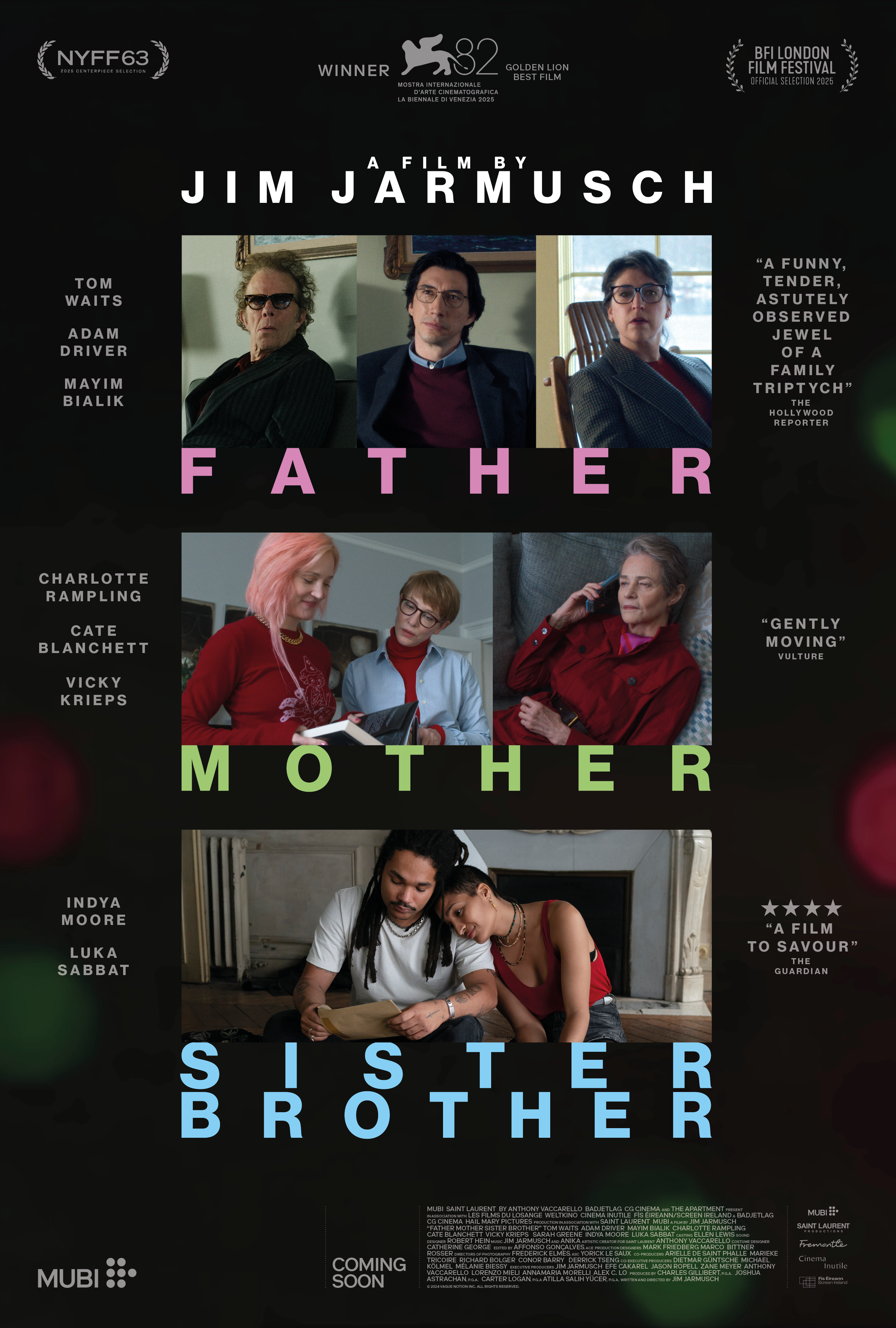 In his latest film, the triptych anthology movie Father Mother Sister Brother which was awarded the Golden Lion at Venice, filmmaker Jim Jarmusch offers another collection of observations on human nature and interaction.
The film itself unfolds in three separate chapters that aren’t connected, per se, but all share narrative beats and themes in common. Each chapter works in the same motifs, whether it be their uncannily similar story structures or lines of dialogue, all exploring the same ideas about different generations of family members.
The first chapter (“Father”), which is also its best, begins with Jeff (Adam Driver) and his sister Emily (Mayim Bialik) going to visit their elderly father (Tom Waits) in New Jersey. This is the segment that sets the tone for the entire film, with each chapter unfolding like its own little chamber piece.
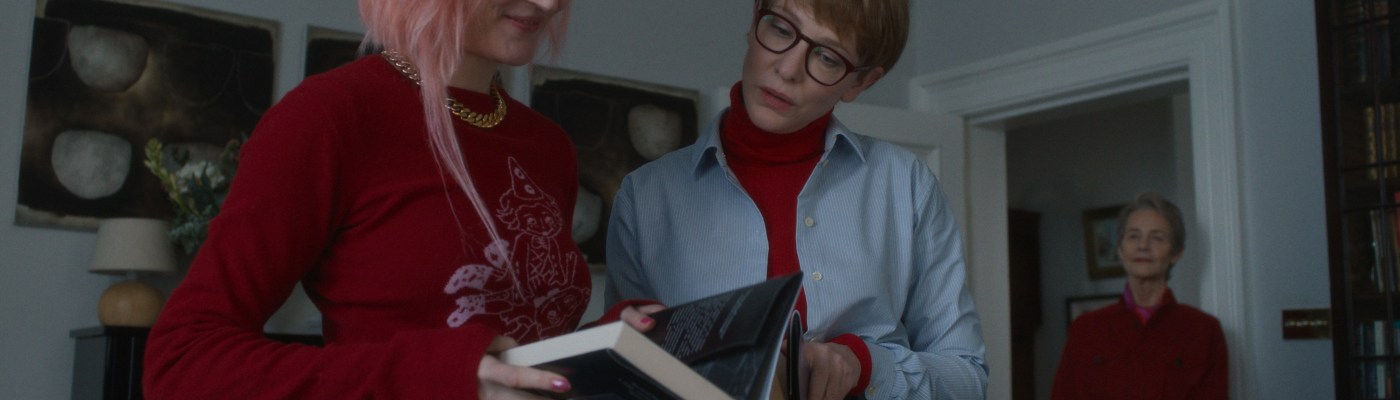
The second chapter (“Mother”) finds an elderly mother (Charlotte Rampling) in Dublin waiting for her two adult daughters, Lilith (Vicky Krieps) and Timothea (Cate Blanchett), to arrive for tea. The third chapter (“Sister Brother”) follows adult siblings Skye (Indya Moore) and Billy (Luka Sabbat) as they reconnect across a day in Paris.
This is a bit of a curious film, even in Jarmusch’s distinctly idiosyncratic filmography. Despite the enjoyment of seeing threads that connect the three stories, it very much feels like an anthology film in so much that it can feel like watching three separate shorts presented together. But each segment is guided by strong performances from the small ensemble cast.
Driver, Bialik and Waits in particular deliver lovely, understated work in the first chapter, carefully handling each of the dryly comic and emotional beats of Jarmusch’s writing. Meanwhile, Rampling, Krieps and Blanchett bring a slightly bristling quality to their portrayals of three different but equally headstrong women in the second act.
In true Jarmusch fashion, Father Mother Sister Brother mainly unfolds around heavily mannered conversations that are as much about what isn’t being said, revealing the dynamics between these three different sets of family members and how they mirror each other. We also get poetic, surrealistic touches, like slow-motion images of skateboarders gliding down the middle of the street that appear in each chapter.
In an ironic twist of fate, the film was reportedly rejected by Cannes, only to premiere at Venice where it won the Golden Lion. That the film was awarded the festival’s top prize from a jury led by Alexander Payne is not entirely shocking; this sort of character and dialogue-driven adult dramedy is very much in Payne’s wheelhouse.
If Father Mother Sister Brother is as low-key and dryly humorous as we can expect from Jarmusch, it’s not without his signature melancholic feel running through it. Perhaps the impact of it will grow even more on subsequent viewings or in the months since watching it. Finally, the film is topped off with a gentle score by Jarmusch and musician Anika, and a few fitting song selections at the beginning and end.

 The Joy of Movies