
By John Corrado
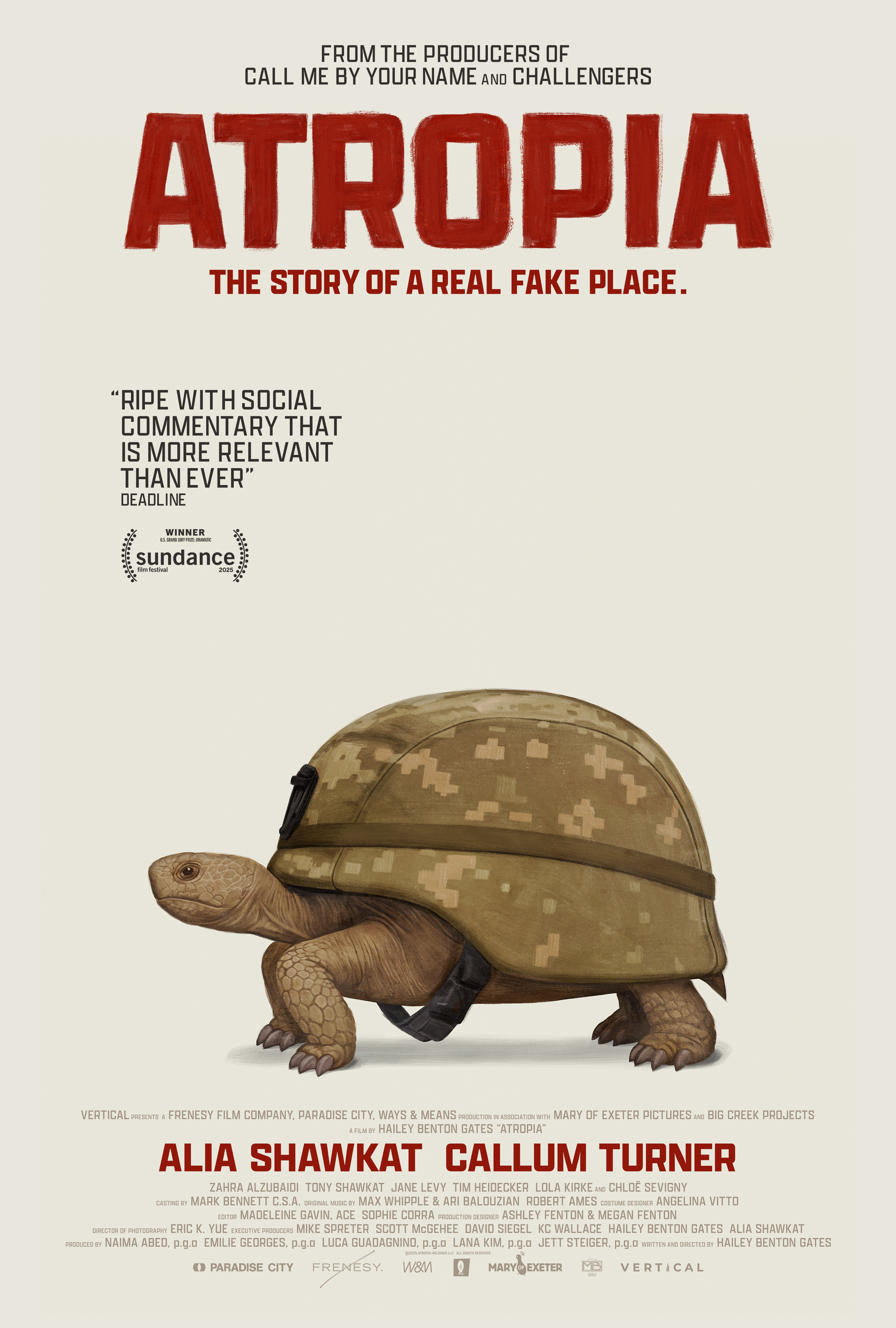
The title of writer-director Hailey Gates’ pretty good Iraq War satire Atropia refers to the name of an elaborate, fully functional set located in the California desert that serves as a training ground for the United States military.
It’s the name of a fictional country, because the government can’t legally name the training camp after a real place. But, for all intents and purposes, “Atropia” is meant to mimic Iraq. This means loads of fake blood and realistic dismembered limb props, as well as a cast of actors – including real-life amputees – to help bring it all to life.
Among the cast members stationed on the base is Fayruz (Alia Shawkat), who takes her role a little too seriously and dreams of being a Hollywood actress for real. She gets cast as a mustard gas chemist within the training scenarios, a role that requires her to stay hidden until being “captured.”
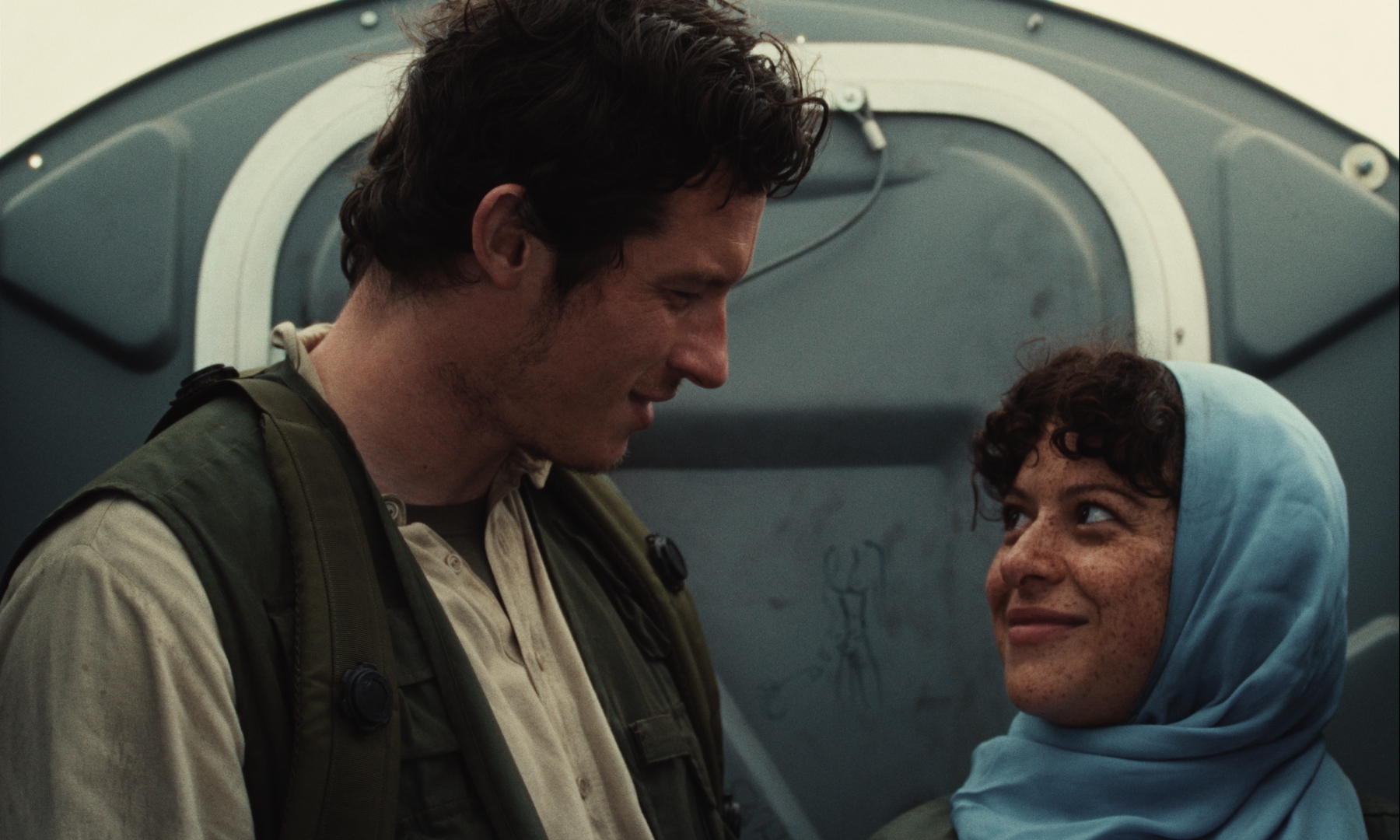
During these exercises, Fayruz meets Abu Dice (Callum Turner), a soldier who is cast as an insurgent. Despite their predetermined roles, the two bond and start spending time together that goes beyond their acting assignments in Atropia.
The place basically functions like a movie set, with all the special effects, sounds, and elaborate makeup needed to simulate an actual combat zone. There is a running gag about how it’s even being pumped through with fake scents to replicate the smell of war-torn Iraq, ranging from the pleasant aroma of sweet chai to the far more repugnant smell of “burnt flesh.”
Because of this, Atropia leans in to a slightly meta quality in how it explores the theatre of war. Gates’ film, which won the Grand Jury Prize at Sundance last year, intentionally follows the basic story beats of an actual war movie, despite all the combat and violence we see being fake. But there is also the real war in Iraq that these soldiers are being trained for and will be sent back to, which adds some weight to the satire.
As a satire, Atropia ends up feeling a little dated (the story is set in 2006), and the plot meanders a bit in places. There are also aspects of the premise and side characters that feel under-explored, as it settles into focusing more on the secret romance between Fayruz and Abu Dice.
But, the fact that Atropia wants us to sort of forget about its high concept conceit, in favour of simply being a story set in this world, is sort of the point. It’s carried through by likeable performances from Shawkat and Turner, who believably play their roles as characters in a world that blurs the line between fact and fiction.
 The Joy of Movies