By John Corrado
 Dreams is the latest film from Mexican filmmaker Michel Franco, and his second collaboration with actress Jessica Chastain following their 2023 dementia drama Memory.
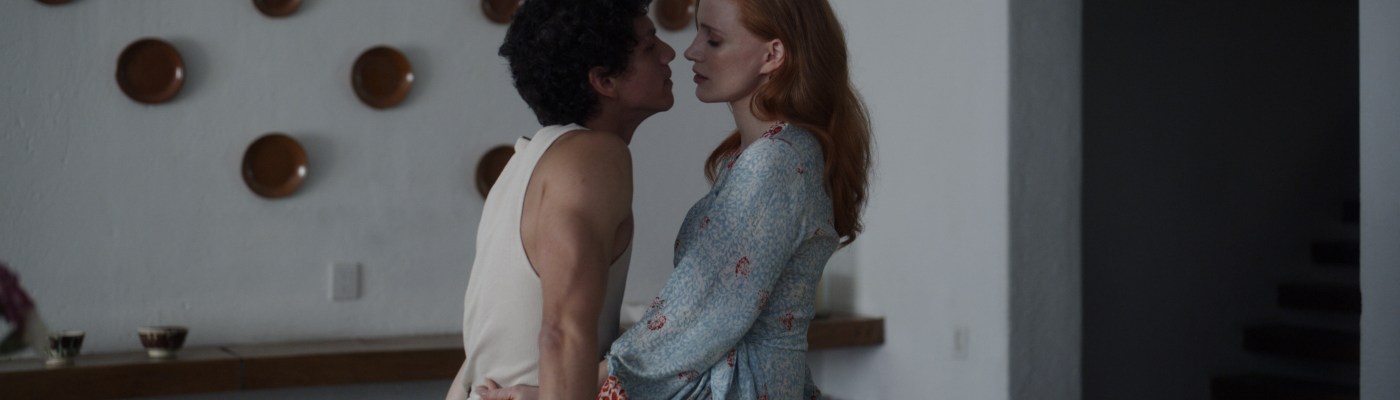
In Dreams, Chastain takes on the role of Jennifer McCarthy, a rich socialite in San Francisco who is having a forbidden affair with a much younger ballet dancer from Mexico named Fernando (Isaac Hernández). But their relationship is complicated by the fact that he is an undocumented immigrant who isn’t legally allowed to be in the country, having smuggled himself across the border to be with her.
Jennifer comes from a family of rich philanthropists, with her father (Marshall Bell) and brother (Rupert Friend) helping fund the ballet academy through their foundation, which also does work with immigrants. These conflicts of interest and power dynamics add further wrinkles to their steamy love affair, which is based primarily around sex.
Franco has carved out his own unique cinematic voice through his last few films, and Dreams has a similar style to (the far superior) Memory in terms of how he observes his characters through long takes filmed mostly in wide shots. The film is once again shot by his frequent collaborator Yves Cape, whose ultra-widescreen cinematography (it’s presented in a 2.39:1 aspect ratio) provides a unique canvas for the actors to interact with each other.
But Franco’s approach feels somewhat detached at the best of times, and there is a coldness to Dreams that keeps us at an emotional distance, instead of allowing us to ever really become fully invested in the central relationship. While the chemistry between Chastain and Hernández does run hot during several sexually charged scenes, the relationship between their characters is purely carnal, and is not really built on much else. It leaves them both feeling surprisingly shallow.
This could be a knock against Franco’s screenplay for not fleshing out his characters enough, or perhaps he is cynically hinting at a broader, more subversive statement about the white, elitist fetishization of illegal immigrants. The emptiness within their relationship might be the point, with Jennifer viewing Fernando as little more than a forbidden plaything to fulfill her desires. The way her father and brother are presented as wealthy and out of touch certainly borders on satire. But Franco seems to be holding back from fully embracing these provocations, before taking a dark turn in the last act that muddles it all up. Which wouldn’t be a bad thing if it felt more justified.
At times, Franco’s singularly detached, bordering-on-clinical style can work to the film’s advantage, but it comes apart at the end with a series of strange character choices that feel poorly set up and ultimately don’t make much sense. It leaves the film going down a road that is hard for the audience to really get behind. We are left with a film that toys around with being a politically charged romance, erotic thriller, and class critique, and there are moments when Dreams is mildly enjoyable as all three. But it never fully works as either one.

 The Joy of Movies