By John Corrado
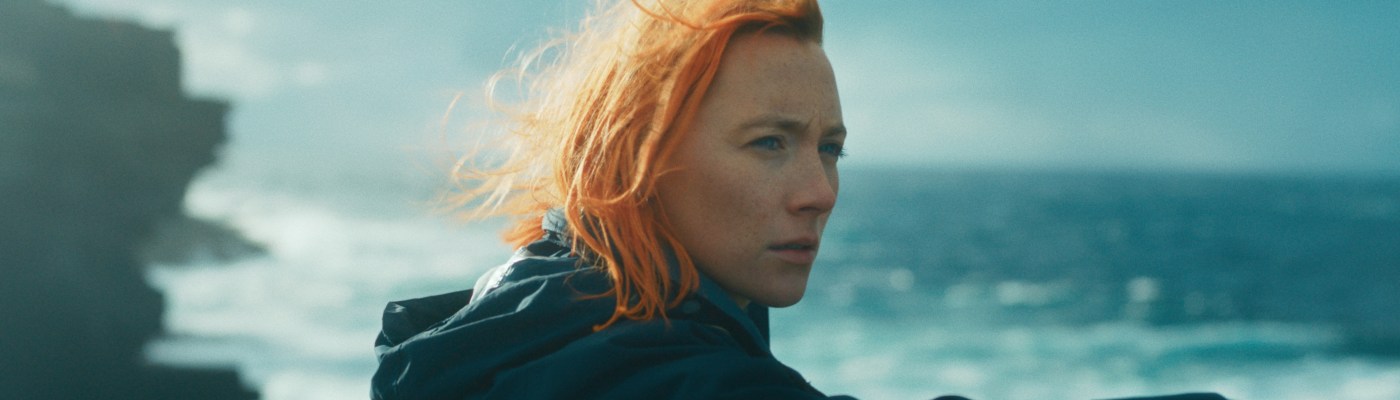
Saoirse Ronan takes on the role of a young alcoholic in The Outrun. It’s a role that allows the actress to deliver an incredible performance showcasing her full depth and range, as the drama depicts the addiction and recovery process as an ongoing journey.
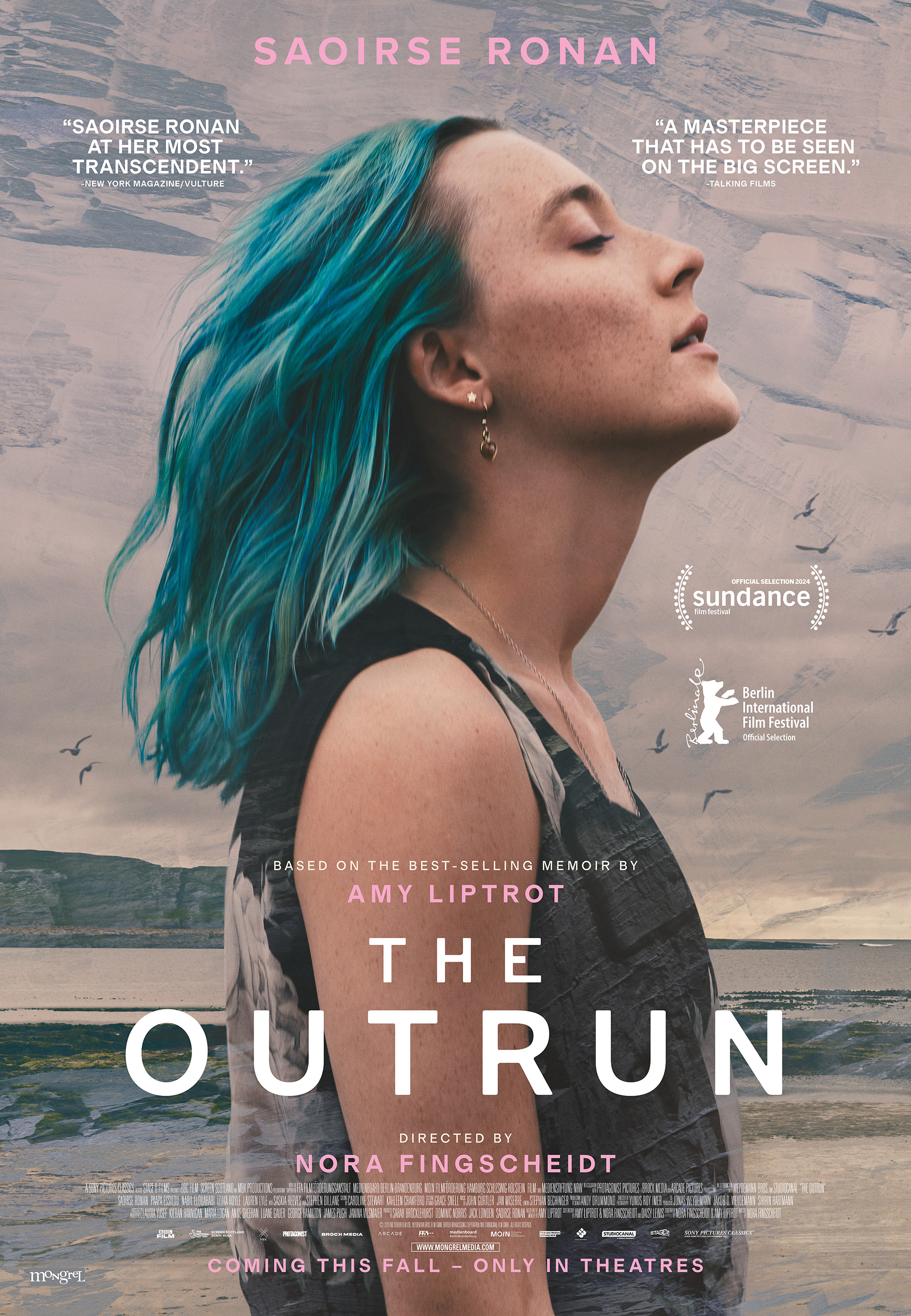
It’s based on author Amy Liptrot’s memoir of the same name, with German director Nora Fingscheidt (who also co-wrote the screenplay with Liptrot) devising a fractured narrative approach to telling this story.
Ronan (who also produced the film) stars as Rona, who in the present day has returned home to Scotland’s Orkney Islands after getting out of rehab. Through montages and flashbacks, the film offers snapshots of her life beforehand (this broken structure recalls fellow addiction drama Beautiful Boy).
Rona is bright, and has a PHD in marine biology, but got dragged into a heavy-drinking “party girl” life in London after graduation, with disastrous consequences. We get glimpses of the other figures in her life; the bipolar father (Stephen Dillane) whose own mental health challenges informed her upbringing, the born-again Christian mother (Saskia Reeves) who found her own salvation, and the boyfriend (Paapa Essiedu), who found Rona’s drunken episodes increasingly hard to handle.
A film like this could become unmoored, with its narrative that jumps around in time and place, and long stretches where we are simply locked in to watching Rona exist in the frame. This isn’t a film about telling a linear story; it’s about capturing the messy, circular experience of addiction and recovery. It’s meant to show recovery as a journey that never really ends, but rather an ongoing process that must be taken day by day, as an older recovering addict informs her at one point.
We see moments from radically different parts of Rona’s journey that exist next to each other in a sort of roundabout, at times intentionally disorienting way. Then Fingscheidt’s film settles into a rhythm of quiet, introspective character drama, as Rona seeks self-imposed isolation amidst the Atlantic sea. At the centre of it all is Ronan, who holds the film together with her always compelling portrayal of Rona, no matter what point she is at in her journey. There are many moments where Ronan is alone in the frame, and she commands the screen.
It’s a fearless, emotionally raw performance, as she depicts Rona’s spirals of wanting to get clean and her self-shame when she relapses, with Ronan convincingly ricocheting between party girl extroversion and reflective introversion. It’s a role that requires her to play through a number of emotions; from big, messy drunken episodes, to quiet moments of recognition, like the look on her face when she admits that she misses the way alcohol made her feel. It’s a powerful showcase for her immense talents as an actor, different from pretty much every other role she has played.
Yunus Roy Imer’s widescreen cinematography captures the windswept landscapes and menacing, crashing sea. Stephan Bechinger’s editing ties it all together, keeping us locked in as the film cuts seamlessly from Rona wandering alone through rural landscapes to dancing at the club and stumbling around the streets of London. The film reaches its crescendo with a striking sequence that defines the sensory, emotional experience of the movie through a symphonic mix of sound and images.
Fingscheidt has crafted a quietly captivating human drama about the healing process, a process that she shows sometimes has to be done alone, disconnected from the rest of the world, the sounds of the ocean providing the steady rhythm. But it’s Ronan who compels us throughout every moment. This is her movie.
Film Rating: ★★★½ (out of 4)

The Outrun opens exclusively in theatres in limited release on October 4th, including at TIFF Lightbox in Toronto. It’s being distributed in Canada by Mongrel Media.
 The Joy of Movies