 By John C.
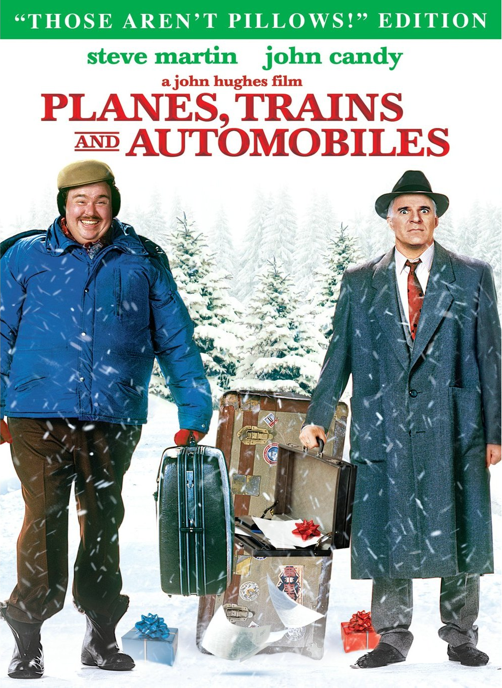
Originally released in 1987, John Hughes’ Planes, Trains and Automobiles is the perfect example of a genre now known as ‘dramedy.’ There are big laughs to be had in this classic road trip pairing of the uptight business man Neal Page (Steve Martin) and the socially awkward but genuinely well meaning shower curtain ring salesman Del Griffith (John Candy), as they try to get home for Thanksgiving. In the end, when we come to fully understand these characters, it’s ultimately as poignant as it is funny.
The other night I re-watched the seminal classic in honour of the oncoming holidays, and it’s clear this is a film that only gets better with age. After directing four wildly successful teen comedies, the film also marked a change in John Hughes’ career, being the first one he directed to focus on adults.
It’s been said that Hughes wrote the first draft of the screenplay in just 3 days, but the production was infamously hard. As no transportation companies wanted bad publicity, the crew had to rent 32 km of train track, refurbish old railroad cars, and even design an airport set and a fictional rent-a-car company. 250 cars were rented for the infamous scene at the parking lot. Having to coordinate for the appropriate weather also played a key role in the shoot.
Although the film had it’s share of adult oriented humour, it was only rated R by the MPAA for the single infamous scene where the f-word is said a total of 19 times. The minute-long scene where Steve Martin loses it to Edie McClurg over a missing rental car, is also one of the things that drew Martin to the original script.
Now, 23 years later, we have a finished film that runs for 92 minutes, but there is rumoured to be a cut that plays for twice as long. It still exists in the Paramount vault, but on Hughes’ own accord the raw footage would take months or even years to piece together into a watchable film. It would certainly be interesting to see the longer version, but the final cut unarguably shows us just as much of the characters’ journey as we need for maximum emotional impact.
The film has largely left it’s mark on popular culture, and was most recently given an unofficial remake in the form of Todd Phillips’ disappointing Due Date. Put simply, I didn’t care for the nasty edged pairing of Robert Downey Jr. and Zach Galifianakis. Comparisons to Planes, Trains and Automobiles ran rampant, with several segments playing almost scene for scene. But what Due Date lacked was the genuine heart that Hughes injected into all of his films.
Both funny and touching, there are many memorable moments on the journey of Neal Page and Del Griffith. One scene that I always remember is when they start bickering over their shared hotel room. But when Neal starts verbally abusing his travelling companion, it immediately stops being a war of words. The scene starts to play off of Del’s face – he is hurt. This is a character filled with empathy and good meaning, and he knows that sometimes he can show a little too much of it.
At first we begin to laugh at Neal’s insults, but then, like Del’s character, we grow sadder and more hurt with every word. It’s the first turning point for the audience, and one of the most heart wrenching scenes in the movie. It only grows more meaningful with each subsequent viewing, and after the premature death of John Candy in 1994, now there is a sadness that underscores many of the scenes.
There are many layers to the characters and there is a real sense of growth over the course of the running time, but the conclusive turning point for Neal comes near the end when he sits on the train and finally pieces together the hidden meaning of his journey. The final turning point for the audience comes when we see Del sitting all alone back at the train station.
John Hughes untimely passed away last year, and though he hadn’t been behind the camera for nearly 20 years, it was impossible not to feel the loss of an icon. I often wonder what sort of films he would have made had he still been alive. Would audiences still be receptive to his brand of humour and heartache? I think the simple answer is yes, and that’s why they live on as classics.
In the outstanding high school comedy Ferris Bueller’s Day Off a year earlier, John Hughes told us that “Life moves pretty fast. If you don’t stop and look around once in a while, you could miss it.” In Planes, Trains and Automobiles he tells us that, no matter what, we’ve got the people we love to grow old with. There were, and still are, a lot of sad things in the world, but Hughes always managed to quietly reassure us that it was going to be okay.
 The Joy of Movies
My favourite comedy of all time!
Candy and Martin were perfect together. Sadly, John Candy, like John Hughes, died far too young.
LikeLike
I agree with everything you said. We need more genuine comedies that aren’t afraid to show their true heart.
Thanks for commenting!
-John C.
LikeLike