By John Corrado
 The Taste of Things, the latest work from French-Vietnamese filmmaker Trần Anh Hùng who was awarded the Best Director prize at Cannes for his work, is a piece of high-class “food porn” mixed with a swooning, bittersweet culinary romance.
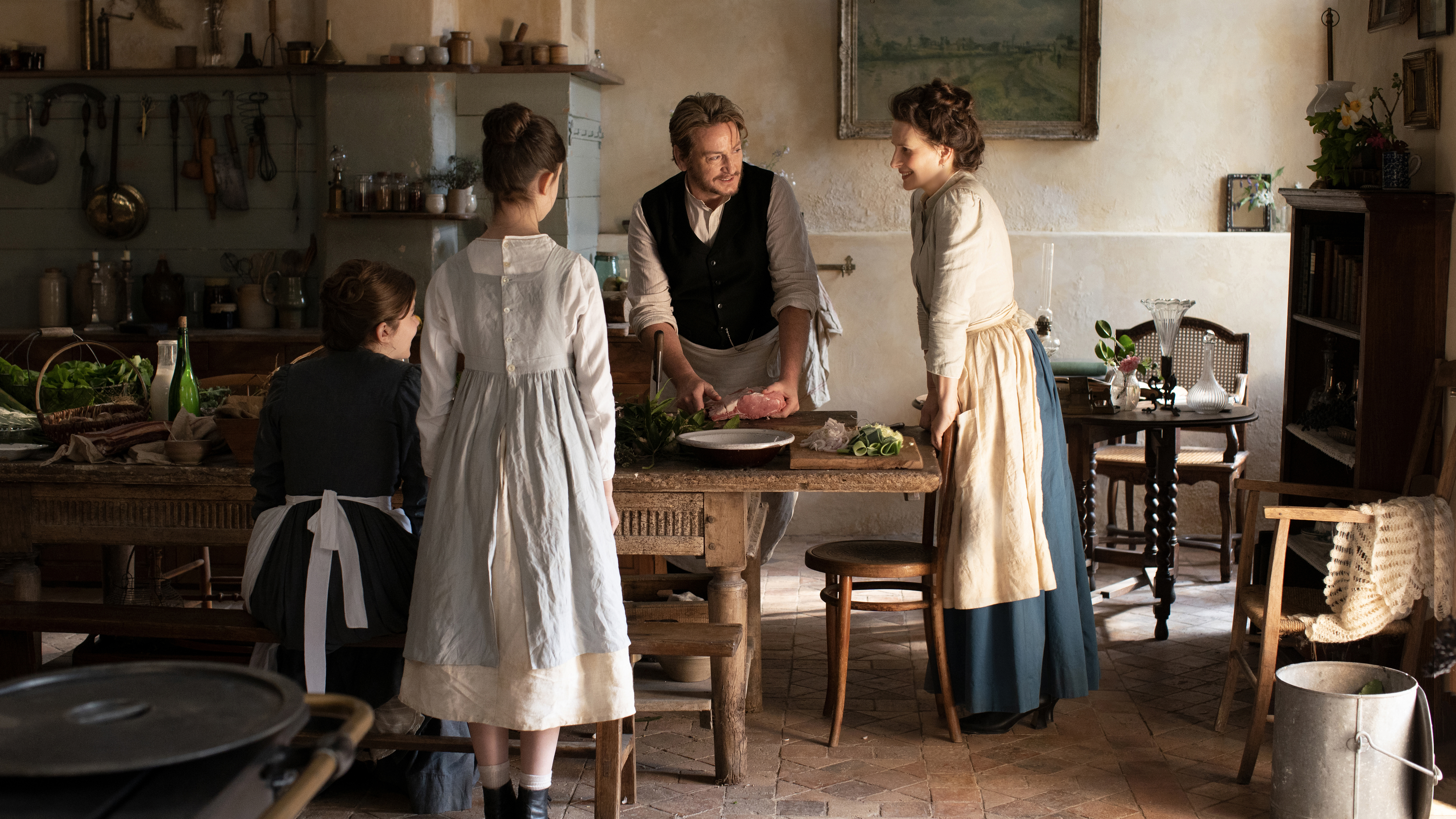
In the grand tradition of other “foodie” films, The Taste of Things offers many beautifully shot sequences of food being prepared and served, which have a serene, almost meditative quality to them. But it’s the wonderful performances by Juliette Binoche and Benoît Magimel, as cooks to lovers, that ground the film.
Eugénie (Binoche) is the longtime cook to Dodin Bouffant (Magimel), a restaurant owner who is dubbed the “Napoleon of gastronomy” by his compatriots in France in the 1880s. But their bond goes deeper than the food she cooks for him and the meals they prepare together, with him coming to her bedroom door at night to see if it is unlocked. If it is not, he will leave, a romance on her terms.
The film unfolds at their home in the French countryside, much of it in the kitchen, where they are helped by housekeeper Violette (Galatéa Bellugi) and her young niece Pauline (Bonnie Chagneau-Ravoire). Pauline shows an interest in learning how to cook and a palate that Dodin recognizes as very mature for her age. Through helping her recognize distinct flavours and learn the art of cooking, Dodin is passing his love of food down to the next generation.
This is a film that takes its time, the first thirty minutes or so devoted to the preparation and serving of a single elaborate meal over the course of an entire day. A rack of veal is taken in and out of the oven for seasoning, cream is ladled over the turbot being slowly roasted in a pan, vegetables are prepared, steam rises out of pots on the stove. But it captures the rhythms of the kitchen, how Eugénie and Dodin work together effortlessly, almost like a dance.
The film itself looks sumptuous thanks to the cinematography of Jonathan Ricquebourg, who plays with light in a painterly way. He indelibly captures the warmth of the natural light coming into the kitchen, or the sunlight falling over the lush garden that surrounds the manor. Ricquebourg also makes classically cinematic use of long takes and 360 pans. During an outdoor nighttime conversation between Eugenie and Dodin lit in magical blue tones, the camera effortlessly glides back and forth between them, before settling into a medium closeup.
Early on, when Dodin’s dinner guests ask Eugenie to join them in their meal and conversation instead of just staying in the kitchen, she responds “I converse with you in the dining room through what you eat.” The film is about food as a conversation between people, a back-and-forth way to communicate desire and other feelings carried through both the preparation and consumption.
We watch the roles in the kitchen change, as Dodin begins to cook for Eugenie. When he asks to watch her eat the food he has prepared, it’s as sensual a moment as one that is sexual. The film offers luscious, romantic imagery (in one instance, the curves of a cooked pear on a plate give way to Binoche’s naked figure curled in bed). In its heart-stopping final moments, The Taste of Things allows all of these aromas and sensory pleasures to meld together, working cinematic magic.
Film Rating: ★★★½ (out of 4)
The Taste of Things opens exclusively in theatres in limited release on February 16th in Toronto and Vancouver, before expanding to Ottawa on February 23rd and other cities in the coming weeks. It’s being distributed in Canada by Mongrel Media.
 The Joy of Movies