By John Corrado
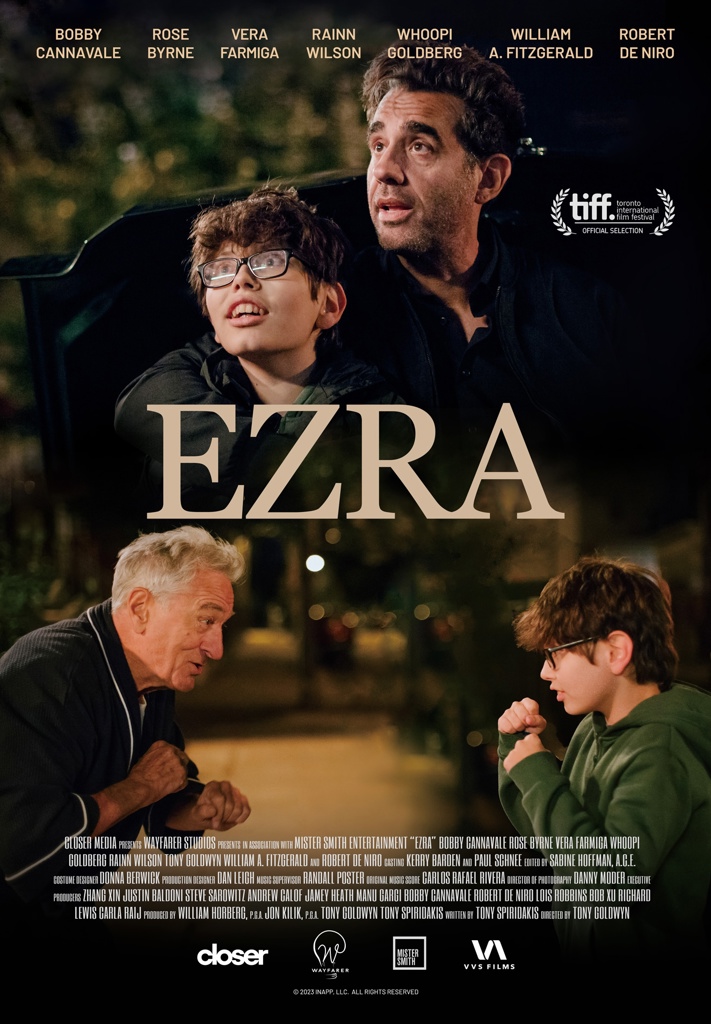 Ezra is the name of the 11-year-old son that standup comedian Max Brandel (Bobby Cannavale) shares with his ex-wife Jenna (Rose Byrne), with disagreements around how to parent him driving a wedge between them.
Ezra (William A. Fitzgerald) is autistic; he’s a bright kid who often “movie talks” (using dialogue from movies to communicate) and has sensory issues around touch. Jenna wants to put Ezra in a special school following an incident, and accepts the doctor’s recommendation to put him on Risperidone.
Max doesn’t want his kid medicated, and wants him to stay in a regular school with support, finding an outlet for his excess energy instead. So Max, who moved back in with his own father Stan (Robert De Niro) following the divorce, decides to take Ezra on a road trip across the country.
Directed by Tony Goldwyn, from a screenplay by Tony Spiridakis (whose son is autistic), the dramedy Ezra is one of the stronger entries in the canon of films featuring autistic representation. For starters, the filmmakers decided to authentically cast the title character, with autistic self-advocate Alex Plank serving as an associate producer on the project. The story is also about celebrating differences and neurodiversity, instead of autistic behaviours being constantly pathologized.
While the film is still partially told from the father’s perspective, this is also a plot point; Max needs to learn how to stop relying on his son, and using him as his “mojo” and good luck charm. Max often treats Ezra as a little wing man, taking him to comedy clubs, which is in stark contrast to how his mother treats him as a little kid in constant need of help and ABA (Jenna says that Ezra needs to be brushed at night with a sensory brush, to which Max quips “he’s not an alpaca”).
It’s also suggested throughout that Max and Stan are on the spectrum themselves, which is one of the things that bonds the three generations of men together, because they all understand each other. They are the “Rice Krispie Boys,” as Jenna calls them, due to their nicknames Snap (Max), Crackle (Ezra) and Pop Pop (Stan). Max’s underlying resentment and anger issues towards the system trying to control Ezra stems from how he was treated growing up.
The most impressive aspect of Ezra is Fitzgerald, the young actor playing the title character himself. The film gets a lot of credit for casting an actually autistic child actor in the role, and the authenticity shines through onscreen. Fitzgerald’s instincts as an actor are spot-on, building his modulations of speech and echolalia into the role. The character himself never feels stereotyped, even if the plot itself can get a little far-fetched at times.
There are moments when the road trip plot of Ezra (and the circumstances surrounding it) feels like it strains some credibility, but it’s grounded in the unique father-son relationship between Max and Ezra. Cannavale delivers a nuanced performance as a man trying to navigate caring for his son while dealing with his own neurological differences. It’s a balance that, at its best, the often gently funny and touching Ezra handles quite poignantly.
Film Rating: ★★★ (out of 4)

Ezra opens exclusively in theatres in limited release as of May 31st, including at TIFF Lightbox in Toronto. It’s being distributed in Canada by VVS Films.
 The Joy of Movies