By John Corrado
The choice to make a Donald Trump biopic at this point in time, when the man himself is already so ubiquitous and overexposed in our media landscape, is both an obvious and somewhat curious one.
In our polarized age, the mere presence of a film like this raises questions about what audience it is even for? Many supporters likely aren’t interested in an unvarnished look at Trump, while the “haters” only want something that confirms their biases of viewing him as a cartoon villain. Besides, we already see Trump on TV all the time, so why watch a movie about him?
But The Apprentice, directed by Iranian filmmaker Ali Abassi (Holy Spider), and shot mostly here in Toronto, is more riff on Wall Street than it is presidential biopic. It’s an approach that largely works, because Abbasi’s flawed but often surprisingly entertaining film is focused on Trump rising through the ranks of New York City as a businessman in the 1970s and 1980s, well before his entry into politics.
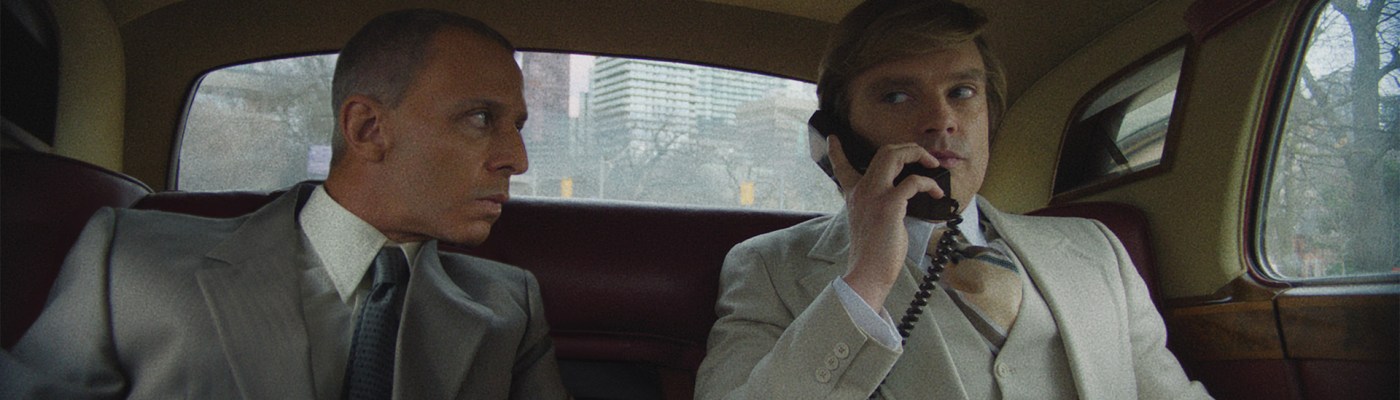
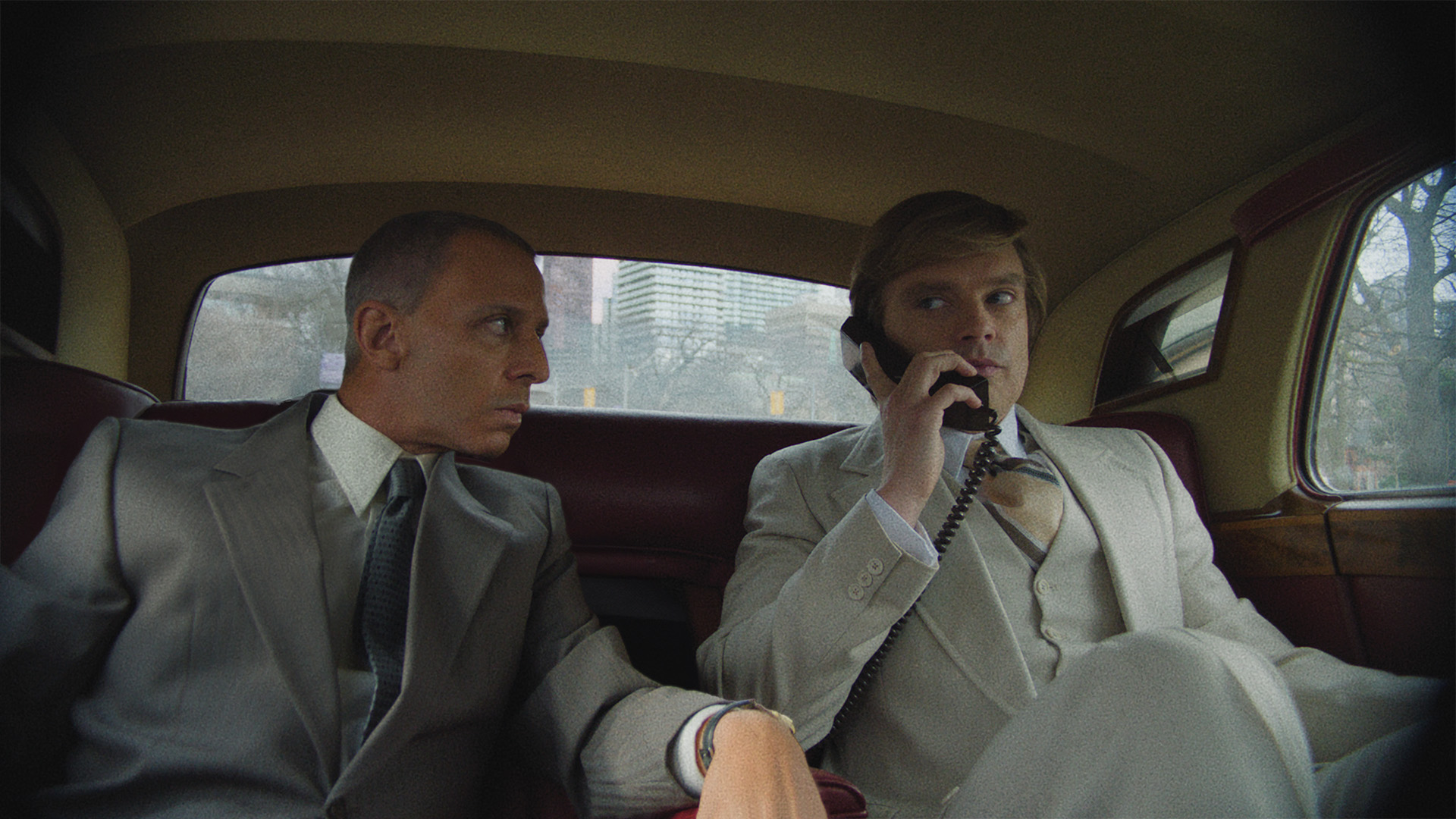
Sebastian Stan takes on the near-impossible task of playing a young Trump, and he imbues his portrayal with a few more layers than you might expect, with his Donald starting off as slightly shy and awkward. It’s a much more interesting read; there are hints of his magnetism and cockiness, but he doesn’t quite know how to use it yet. The film is all about The Donald sharpening those skills. This is where Trump’s mentor, the infamous lawyer and political “fixer” Roy Cohn (played by Jeremy Strong), comes in.
The story mainly focuses on Trump’s early years as a real estate developer in New York, as he is taken under the wing of the closeted Cohn, who becomes enamoured with him. The early scenes show their friendship developing as Cohn schools Trump in his ruthless way of doing business. Cohn’s worldview is built around the idea that there are “killers” (read “winners”) and “losers,” and you sure as hell don’t want to end up in the latter camp. It’s a mentality that Trump obviously still maintains to this day.
The film, of course, also playfully hints at what is to come for Trump (i.e., his presidential run), as it shows him morphing into a popular if somewhat polarizing media personality who played a major role in building modern New York. But this is mainly a classic story of the apprentice becoming the master, as Trump finds success by developing his own cutthroat style, and needs Cohn less in his life. The tables start to turn, and Strong’s AIDS-stricken Cohn actually garners surprising sympathy in the later scenes when he begins to feel rejected by Trump.
The screenplay by Gabriel Sherman is at its best when exploring the textures of this unlikely friendship (the possible subtext is that the homosexual Cohn views the womanizing Trump as the one thing he can’t have, which adds a tension to their relationship). Sherman’s script also touches on Donald trying to break out from under the shadow of his father Fred Trump (Martin Donovan, a standout especially in his later scenes), as well as meeting his first wife Ivana (a scene-stealing Maria Bakalova), and doggedly pursuing her.
The most surprising thing about The Apprentice is that it actually serves as a strangely sympathetic portrayal of Trump at times, at least in the first half. As Stan’s Trump does become more abrasive and aggressive over the course of the film, we see how he was pushed to become this way by the man who trained him. It’s a more refreshingly balanced approach to depicting such a divisive figure. This isn’t entirely the simple political “hit job” that it could’ve been, but the film is also not immune to its more salacious and heavy-handed moments.
In particular, Abbasi’s choice to show a scene where Trump violently sexually assaults his wife Ivana is questionable. The incident was brought up during their divorce proceedings in 1990 (though Ivana later retracted her statements that it was rape), but the problem is that it’s nearly impossible to depict a scene like this without it feeling inherently exploitative to show onscreen.
The inherent problem with a film like The Apprentice is that pretty much every viewer will come to it with preconceived ideas about who Trump is and how they feel about him, so its appeal might seem limited beyond simple audience curiosity. It also doesn’t do much to challenge these notions, in either direction (it won’t sway a single voter, for or against).
In this way, Abbasi’s film will function as a bit of a rorschach test for viewers; those who already dislike Trump going in will view it as a portrait of a villain being made, while more moderate viewers might be pleasantly surprised by how he is portrayed here, outside of the more extreme moments. It’s easy to imagine some viewers thinking the film doesn’t go far enough, while others will be pleased that it finds any nuance at all in its depictions of Trump and Cohn.
The main challenge is that Trump is literally everywhere right now, so it’s hard to pull off a convincing dramatic portrayal of someone who is already on our screens all the time, and who already evokes such strong feelings in people. Which makes what Stan does with the role somewhat more impressive. Stan’s performance does occasionally veer into feeling like an impersonation, especially towards the end (the hand movements are a bit more convincing than the overly pursed lips).
But, for the most part, he delivers a surprisingly good and at times even oddly likeable portrayal of Trump, that is believable while mostly sidestepping being a caricature. Balancing him out is Strong, who gives an uncanny performance as Cohn. The Succession actor portrays him with a completely locked-on intensity through his sharp, staring eyes and measured voice. It’s compelling, eerily believable work, especially if you’ve seen the documentary Where’s My Roy Cohn?, which covers a lot of this material.
There are moments when we can tell that the film was rushed through production to be released prior to the 2024 election. At times it does feel like a TV movie from the era, though this is partially an aesthetic choice (the video-grade quality of Kasper Tuxen’s cinematography is clearly intentional to help evoke the feel of the time period). The story also loses some steam towards the end of the two hour film, and when not directly focused on the relationship between Trump and Cohn.
The worst thing about The Apprentice is that it says little if anything new about Trump or his world. But the best defence of Abbasi’s film is that it’s frequently entertaining and features enjoyable performances. It works best as a well-acted portrait of student overtaking teacher, that just so happens to show the rise of the former (and possibly future) American president.
Film Rating: ★★★ (out of 4)
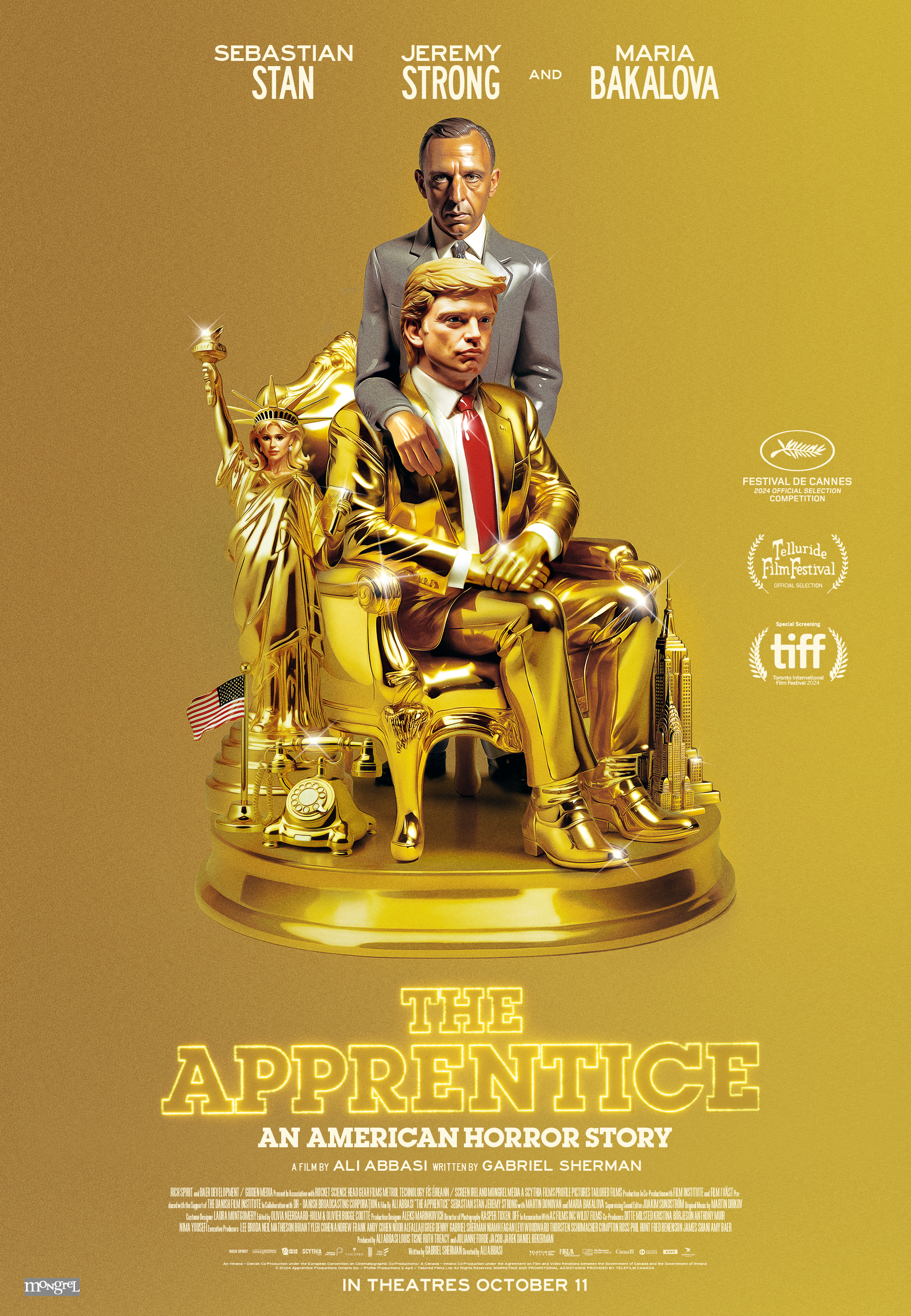
The Apprentice opens exclusively in theatres on October 11th. It’s being distributed in Canada by Mongrel Media.

