
By John Corrado
The latest film from Korean director Park Chan-wook, following up the gauzy, neo-noir, romantic mystery of 2022’s stunning Decision to Leave, No Other Choice is a wildly entertaining film that moves so seamlessly between dark comedy, drama, and murderous thriller, that it seems to defy genre itself.
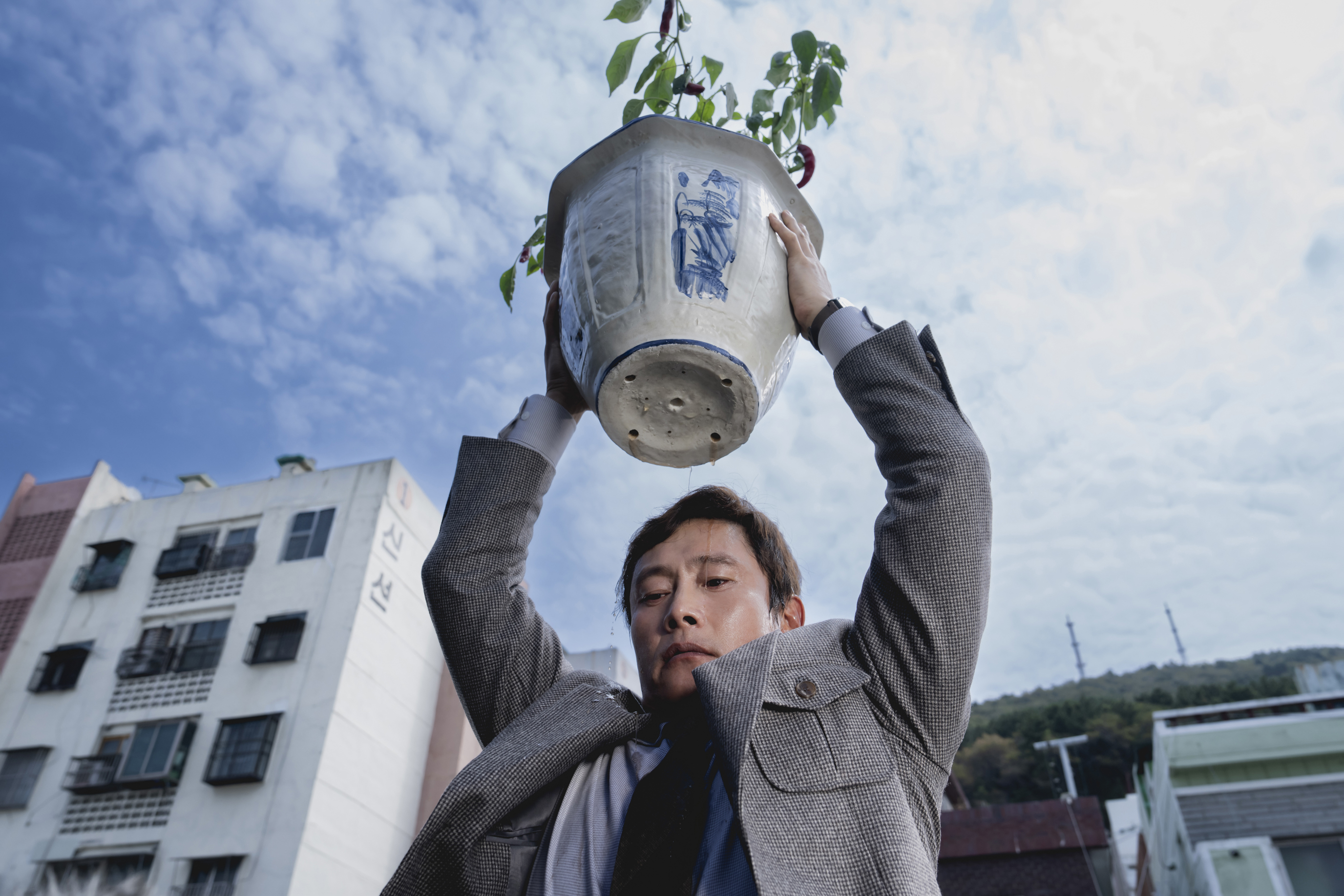
The story centres around Man-soo (Lee Byung Hun), a family man in South Korea who has given over two decades of his life to working in a paper factory. When he gets laid off, and struggles to find new work in a changing economy, Man-soo takes drastic measures, which includes picking off his competition one by one.
The film finds humour in the absurdity of men all jockeying for positions at different paper factories, but there is deeper social and cultural commentary going on as well. It’s about the loss of money, yes, but also the societal shame of being out of work and his wife (Son Ye-jin) needing to take a part-time job to pay their mortgage and support their two kids. The title refers to a phrase that comes up many times throughout the film, showing the desperation of the characters who feel there is no way out of their situation.
A class-conscious social satire from South Korea might evoke comparisons to Bong Joon-ho, but No Other Choice continues to prove that Park is operating entirely on his own wavelength. The screenplay, inspired by Donald E. Westlake’s novel The Ax, takes it’s time setting up so many different story strands, that it’s no small wonder the whole thing comes together so well. Park’s film is engaging every step of the way, zigging and zagging in such unexpected ways that we are hooked for the entire 139 minute running time.
In the leading role, Lee must walk this tonal balance as well, finding sympathetic notes in his portrayal. Cinematographer Kim Woo-hyung brings a playfulness and inventiveness to his imagery. It all comes together through Kim Ho-bin and Sang-beom Kim’s editing, with one sequence in particular set to music that evaporates the line between action, suspense, and morbid comedy to become one of the most memorable scenes of the year. This truly is a golden age for Korean Cinema.
 The Joy of Movies