
By John Corrado
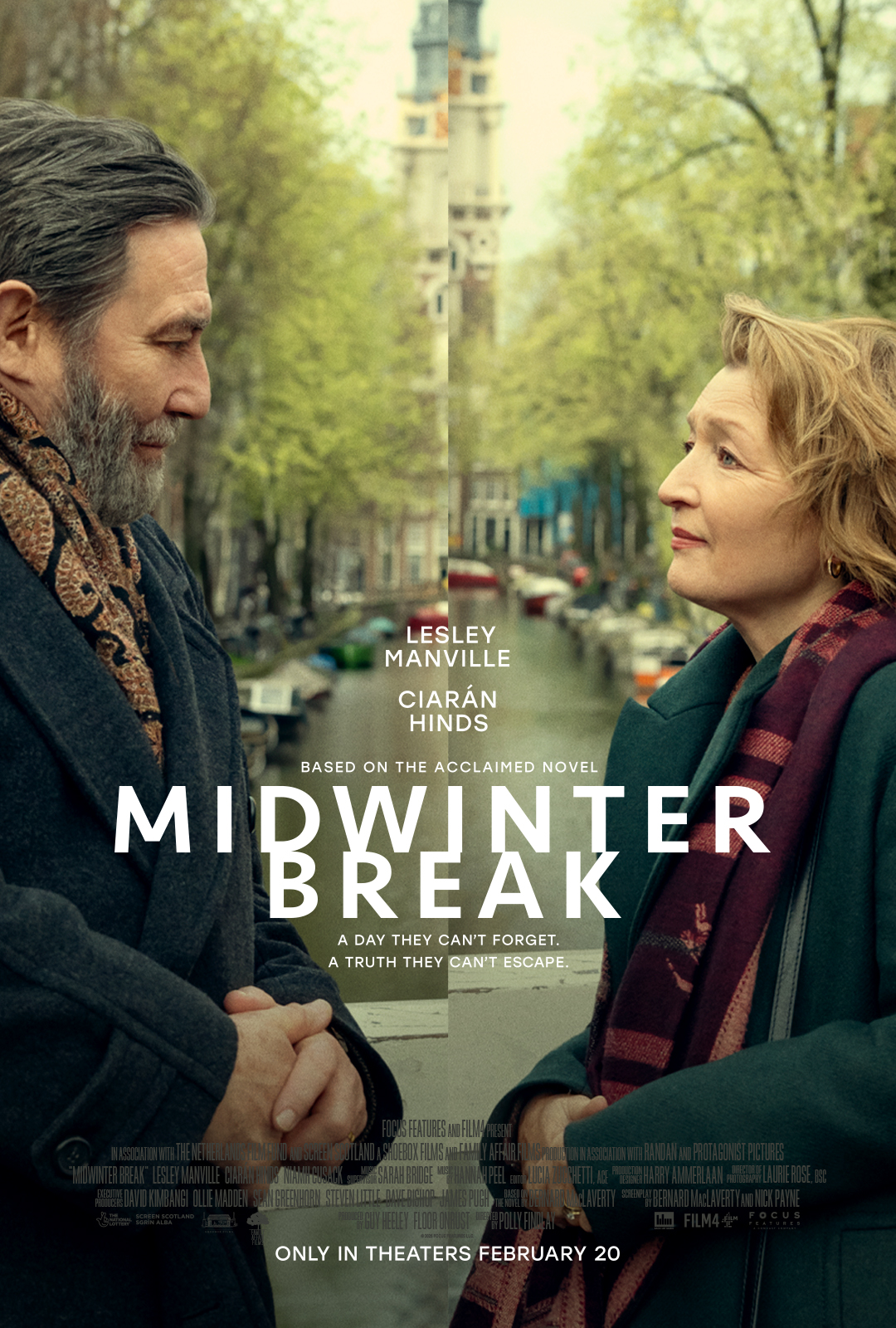 In Midwinter Break, the feature directorial debut of British National Theatre director Polly Findlay, Lesley Manville and Ciarán Hinds star as an older married couple on vacation in Amsterdam.
Stella (Manville) and Gerry (Hinds) are originally from Ireland, but have lived together in Glasgow for years. It’s clear from the opening scenes of Midwinter Break that the spark has gone out of their marriage. Stella goes to Christmas Eve mass alone, and comes home to find Gerry sound asleep in his easy chair.
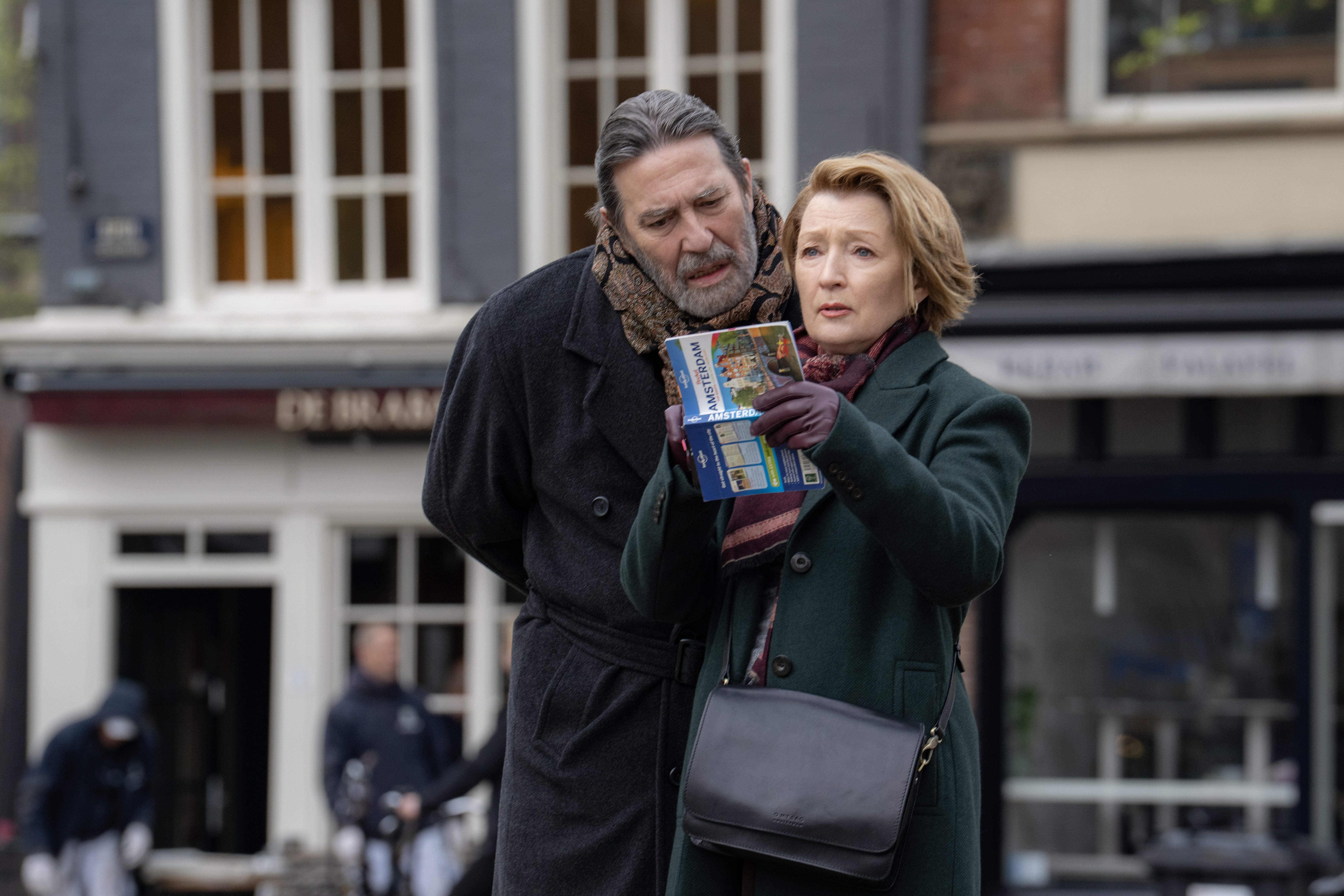
The next day, Stella surprises him with tickets to Amsterdam. Most of the film takes place during their vacation in the Netherlands, as they reexamine their lives together and wrestle with the feeling of home; the first place they visit on their first night in Amsterdam is an Irish pub, an irony not lost on them.
There was an accident in their history, glimpsed in the opening flashback, that has shaped both of their outlooks on life in different ways. What underpins Findlay’s film, which was adapted from a novel by Irish writer Bernard MacLaverty who also co-wrote the screenplay with Nick Payne (We Live in Time), is an exploration of a relationship built on fundamental spiritual differences.
The history of how Catholics were persecuted in both Ireland and the Netherlands plays a big role in adding deeper context to the story, as does the backdrop of Amsterdam, with its nooks and crannies of historical significance that Stella and Gerry are able to explore. The city itself is nicely captured by cinematographer Laurie Rose, who does a good job of shooting it, including a nighttime walk through the infamous Red Light District.
It’s a very quiet and understated film. Despite only running for a tight ninety minutes, the story unfolds at a patient pace. Findlay isn’t interested in delivering something that is in any way flashy, but rather offering an intimate examination of the shifting relationship between two people who have been together for decades, simply letting us observe Stella and Gerry in moments together. As such, this is a film of mostly small developments that feel major for the characters. There is a tenderness to it, but also an underlying tension.
Findlay takes an often stage-like approach to the material, which is not unexpected considering her theatre background, but it’s one that works thanks to the pair of seasoned performers at the centre of the film. Manville and Hinds are the best sorts of actors to deliver material like this, capable of saying so much through a careful look or line reading. The actors are equally compelling in moments when their emotions spill out and are vocalized, leading to some impactful dialogue exchanges.
They have a few interactions with other players who come in and out of the film, but Midwinter Break is mostly a two-hander between Manville and Hinds. It’s their performances as a couple at a crossroads in a decades-long relationship, that keep this small film engaging to watch.
Film Rating: ★★★ (out of 4)
 The Joy of Movies