By John Corrado
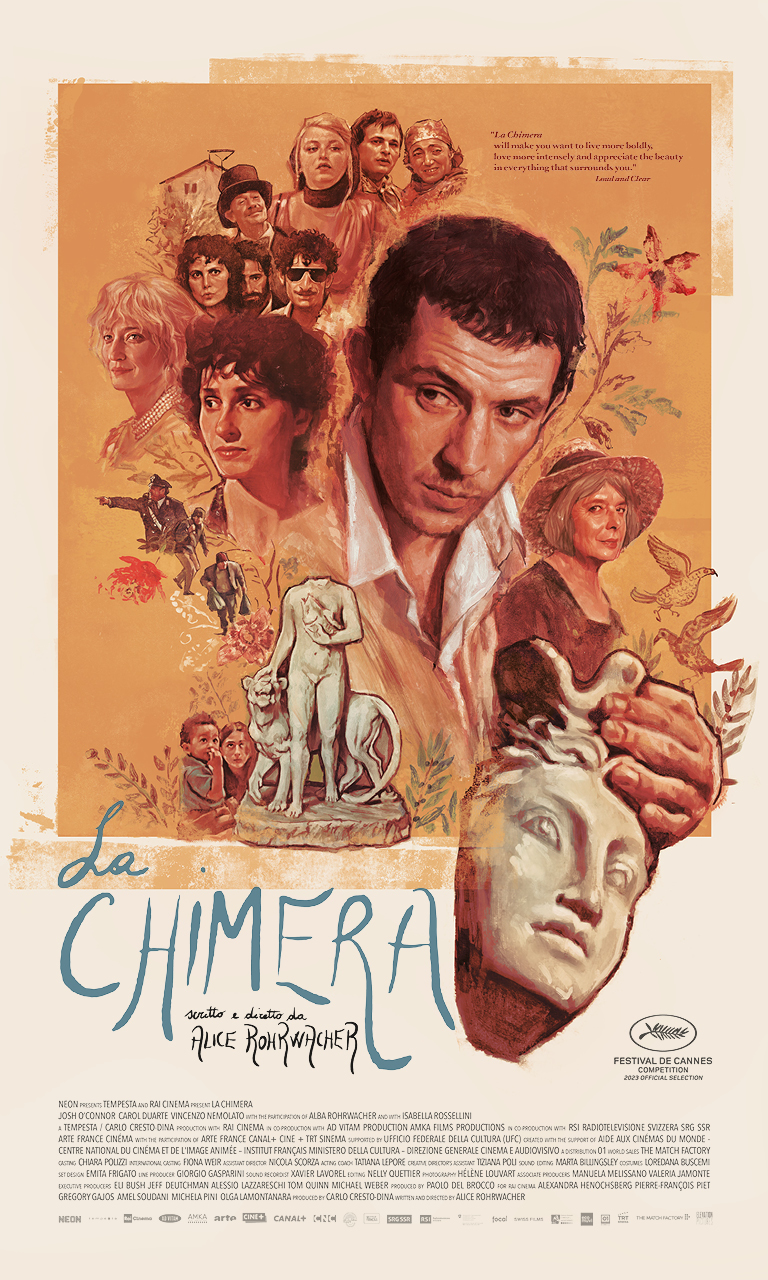 Alice Rohrwacher’s La Chimera, the Italian filmmaker’s latest following The Wonders and Happy as Lazzaro, is itself a bit of a chimeric creature. The film unfolds with a loose, shifting narrative structure that morphs between magical realism, absurdist comedy and character drama, shone through with a wistful nostalgia for the past.
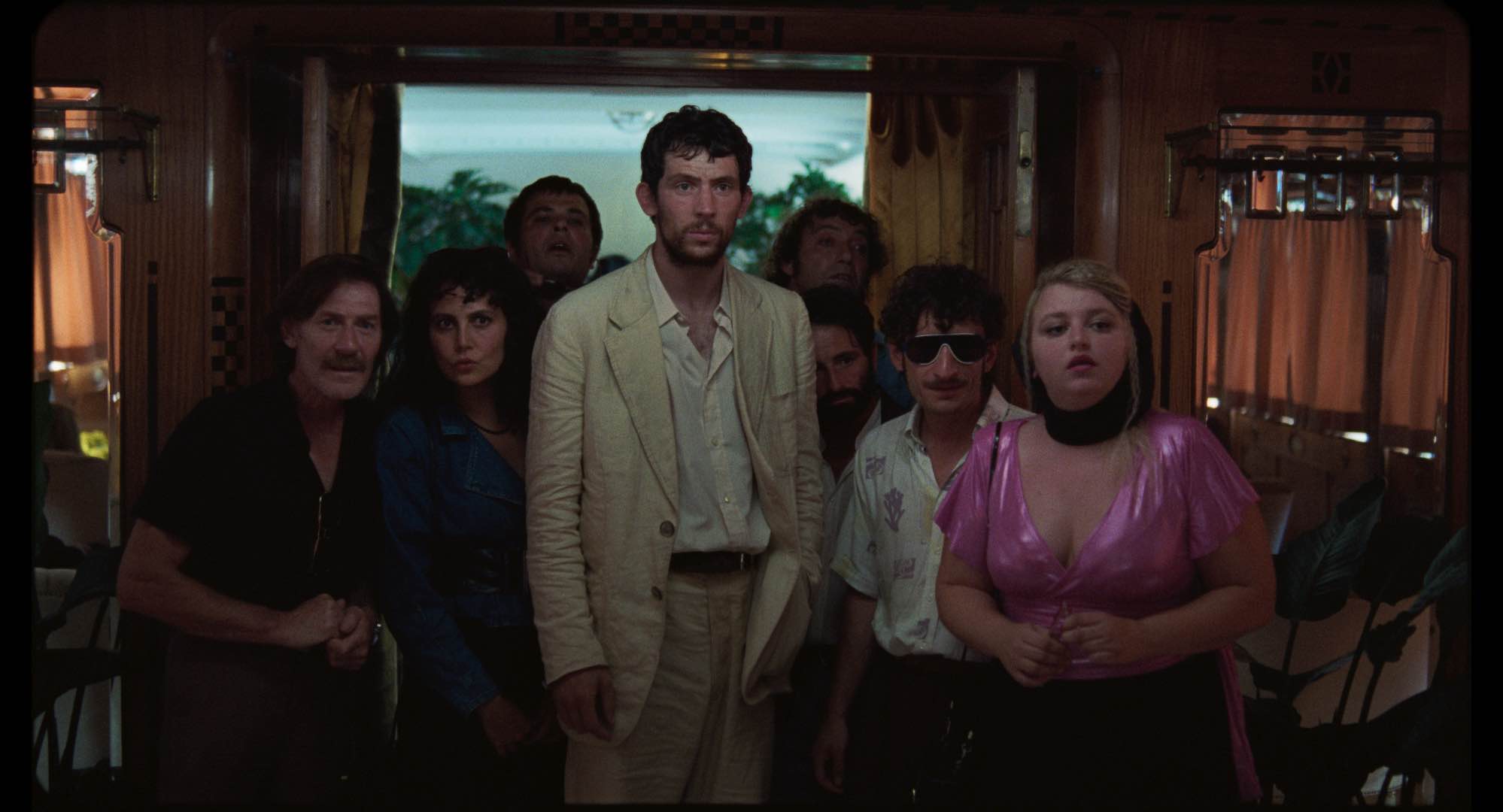
The film is set in the 1980s, and begins with our protagonist Arthur (Josh O’Connor), clad in a rumpled, light-coloured linen suit, taking the train back to the countryside in sun-dappled Tuscany. Arthur is a British archeologist who has just gotten out of jail, and is returning to join his band of tombaroli – grave robbers – who break into Etruscan tombs.
Arthur’s merry band of thieves steal ancient artifacts meant for the dead to sell on the black market. With his dowsing rod in hand, Arthur has the gift of second sight for knowing where to dig for these buried treasures, and is on a bit of a personal odyssey; he is not only setting out in search of his lost love Beniamina (Yile Vianello, seen in memory-like flashbacks), but also to perhaps find a passage to the underworld.
Arthur is staying at the rundown home of his lost love’s mother (Isabella Rossellini), who lives with a house full of young woman, finding himself brought in as an extension of their eccentric family. The midsection especially has a sense of playfulness to it as Arthur’s band of thieves sneak off on their madcap treasure hunts, trying to evade the attention of authorities.
Rohrwacher’s direction balances the film’s more playful, stylistic elements with an at times dreamlike tone (it’s fitting that, in the opening scenes, Arthur is awoken from a dream by a train conductor wanting to punch his ticket). Shot on a mix of 35mm and 16mm film, Hélène Louvart’s cinematography evokes the hazy feel of the past. The film utilizes different aspect ratios, the corners of the image presented with the soft, rounded edges of an old photograph.
In more slapstick sequences, the characters are shown running in a slightly sped up way as if they are in a silent movie. In other moments, they break the fourth wall and speak to the camera directly, adding to the feeling that we are being told a folk tale. But Rohrwacher also works in deeper themes about who owns these artifacts from the past, and if we should be profiting off of them at all.
In its own way, La Chimera is a bit of an enigma, with the story slipping through our fingers as it reveals more of itself. At the centre of it all is O’Connor, who carries the film with a fascinating performance that strikes a balance between portraying Arthur as droll comic presence and mournful figure. He acts as our bemused guide into Rohrwacher’s unique, singular world, wandering around as if sleepwalking through an invisible line between past and present, a space that the film itself wonderfully occupies.
Film Rating: ★★★ (out of 4)
La Chimera opens exclusively in theatres in limited release on April 5th, including TIFF Lightbox in Toronto. It’s being distributed in Canada by Elevation Pictures.

