By John Corrado
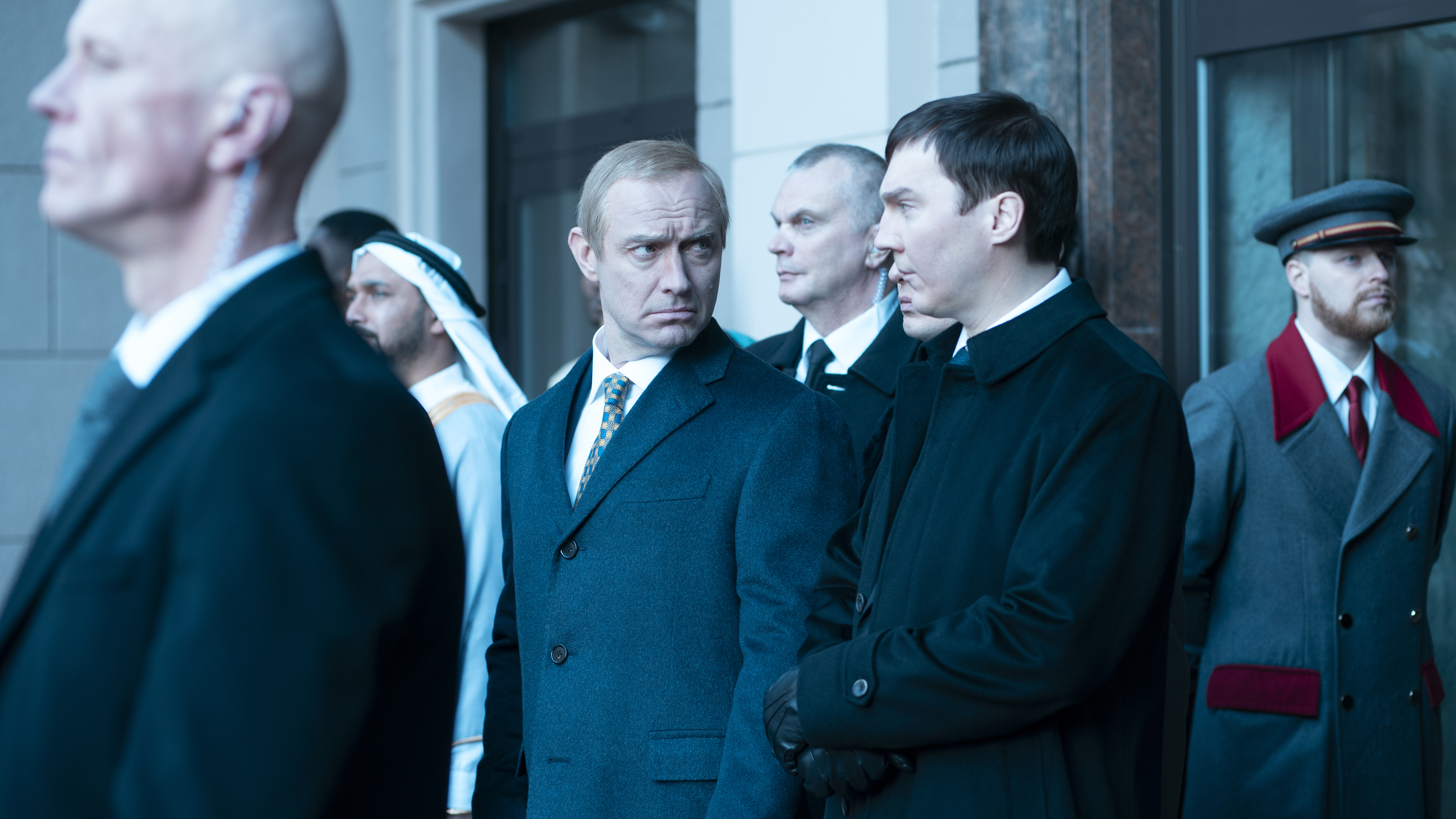
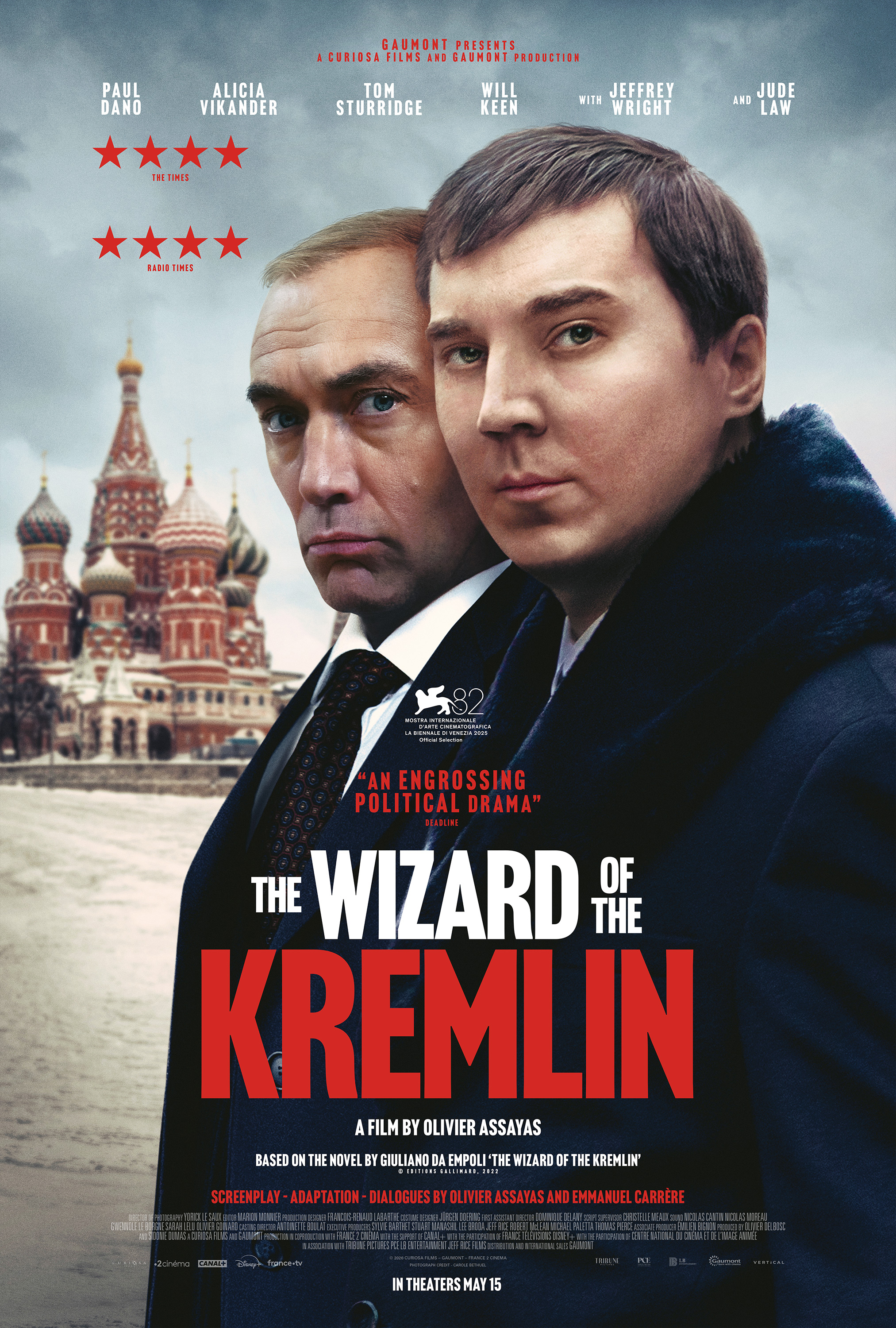 The title of The Wizard of the Kremlin, the latest film from French filmmaker Olivier Assayas, refers to Vadim Baranov (Paul Dano), a fictional, composite figure who is shown to be at the centre of Putin’s rise in post-Soviet Russia.
Adapted from Emmanuel Carrère’s 2022 novel of the same name, the film unfolds across two timelines. In 2019, Vadim is being interviewed by a reporter (Jeffrey Wright) at his home in rural Russia, reflecting on the decade-and-a-half he spent as a close advisor to President Vladimir Putin (played in the film by Jude Law).
The flashbacks take us back to a story that begins in the few years after the fall of the Soviet Union, presenting it as a period when decadence and Western influences were allowed to take hold, not unlike the Weimar Republic.
Vadim starts as an idealistic young artist, pursuing a relationship with fellow bohemian Ksenia (Alicia Vikander). But a job working as a reality TV producer leads to a plot to recruit an intense, camera shy intelligence agent by the name of Vladimir Putin to run for office, and strategically replace Boris Yeltsin (George Sogis) as President.
There’s a line early on about how, in the Soviet Union, privilege was seen as a form of currency, and being close to power was more important than money. It’s important context for the backdrop of this film, which mainly follows Vadim’s shifting morality as he uses his media savvy to help Putin take power, and tries to remain close to him as he ascends to the presidency, even at the expense of his own personal relationships.
For a film about political power and ambition, The Wizard of the Kremlin is itself ambitious, a decades-spanning portrait of Putin’s rise to power, and the associate hollowing out his soul to remain close to it. While Vadim is a fictitious character, he is largely based on Putin advisor Vladislav Surkov, and the film has real historical events, such as the Chechen war and the annexation of Crimea, unfolding in the background.
The film does run long at 136 minutes, and the pace can lag in a few places. It’s so densely packed with ideas and themes that a case could be made that this material would’ve been better served as a mini-series. But Assayas always finds an interesting thread to get back to. As such, the film itself is sprawling but consistently engaging. On a political level, The Wizard of the Kremlin is most fascinating at showing how Putin orchestrated an image of strength and weaponized fear in order to gain control, and reshape the country’s power structure from within.
Assayas does a fine job weaving together elements of thriller, political drama, and even satire into a film that is able to maintain interest overall. It works thanks to a strong performance from Dano, who turns Vadim into a bit of an enigma, his lack of outward emotion a feature not a bug; this is someone quietly driven only by being close to power. Law, despite not even attempting a Russian accent, eerily captures the frown and chilling look of Putin in a way that makes him magnetic to watch. If he’s only a supporting player, his figure looms large over all of it, as it does in real life geopolitics.