
By John Corrado
Between the critical success of films like Nirvanna the Band the Show the Movie and Blue Heron, and the streaming series Heated Rivalry becoming a legit global pop culture phenomenon, there’s little denying that Canadian content (or “CanCon” for the media literate) is having a big moment right now.
So, in honour of this being Canada Day, I thought it would be fitting to put together a list of some of my favourite homegrown films. This is in no way an exhaustive “best of” list for Canadian movies. If it was, there are many more that would make this list and more directors that would be appear. This is just a selection of ten little seen to widely acclaimed homegrown films that I have personally loved over the years, many of them that I’ve also covered on this site.
Happy Canada Day!
Winter Kept Us Warm (1965)
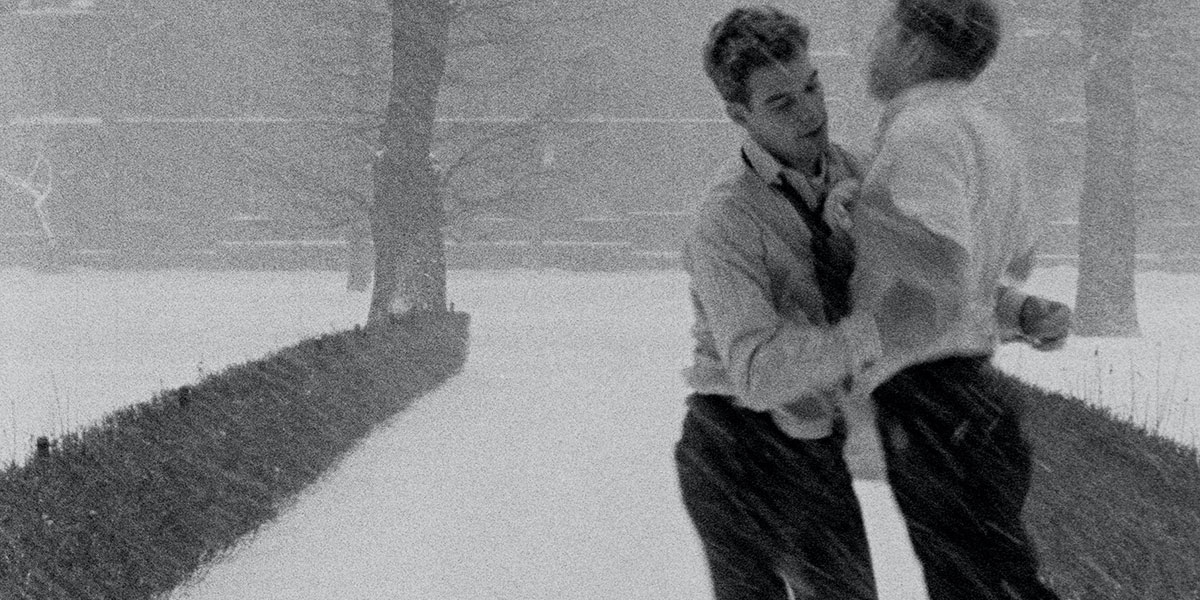
This small black-and-white drama was shot on 16mm film at the University of Toronto in the 1960s by writer-director David Secter while he was still a student there, and it’s notable as both the first queer-themed Canadian film and the first English-language Canadian film to play at Cannes. It’s a lovely, evocative portrait of the blossoming connection between two young men (John Labow and Henry Tarvainen) at a time when such things weren’t spoken about, subtly exploring both homosexual awakening and internalized homophobia. A wonderful little gem that is finally, however quietly, getting the flowers that it deserves, including a recent 4K restoration.
Goin’ Down the Road (1970)
Donald Shebib’s Goin’ Down the Road is one of the quintessential pieces of English Canadian cinema, and I’m including it here not only for its cultural impact, but also for the impression that it left on me when I first watched it. The film follows a pair of restless Maritimers (Doug McGrath and Paul Bradley) in need of work, who make their way to Toronto. It’s a compelling working class character drama, but also now serves as an evocative time capsule of the city in the mid-20th century. You get to see Toronto as it actually was in the early-70s; “Toronto the Good,” as they used to say. It also features the film debut of Canadian screen legend Jayne Eastwood, now a recognizable face across any number of homegrown films and TV shows.
C.R.A.Z.Y. (2005)
If Winter Kept Us Warm was an early landmark of Canadian queer cinema, then late director Jean-Marc Vallée’s C.R.A.Z.Y. – released forty years later – deserves a spot on any list of the most influential queer movies. Released the same year as Brokeback Mountain, this Quebec-set coming of age (and coming out) movie unfolds across the 1960s and ’70s, following a young man (Marc-André Grondin) struggling with his sexuality and family relationships. It’s an emotional portrait of a sprawling Quebecois family, backed up by an incredible soundtrack (David Bowie figures prominently here). It should also be included on any list of great countercultural Christmas movies, with the holiday providing a key backdrop. A knockout work from a director who passed away far too soon in 2021.
One Week (2009)
Director Michael McGowan’s road movie begins with a man (Joshua Jackson) receiving a terminal diagnosis and a simple message on a Tim Hortons Roll Up the Rim coffee cup to “Go West.” What unfolds is a motorcycle road trip from Toronto to Tofino that plays as pure Canadiana, backed up by an excellent homegrown soundtrack and one of the great examples of how to use voiceover narration. It’s poignant stuff, and there’s a scene with Gord Downie that feels eerily prescient; it’s even more bittersweet now following the beloved singer’s own cancer diagnosis and death in 2017.
Victoria Day (2009)
Author David Bezmozgis made his feature directorial debut with this evocative portrait of Toronto in 1988. Mark Rendall stars as the teenage protagonist in this coming-of-age drama, which is as much about going to concerts, falling in love, and listening to Bob Dylan, as it is about the clash between kids and their immigrant parents. There’s also a missing person case providing a darker backdrop. It released at the same time in 2009 as the underrated American film Adventureland, and I remember drawing favourable comparisons between the two. Bezmozgis’s film is a gem that deserves far more recognition over a decade-and-a-half later.
Take This Waltz (2011)
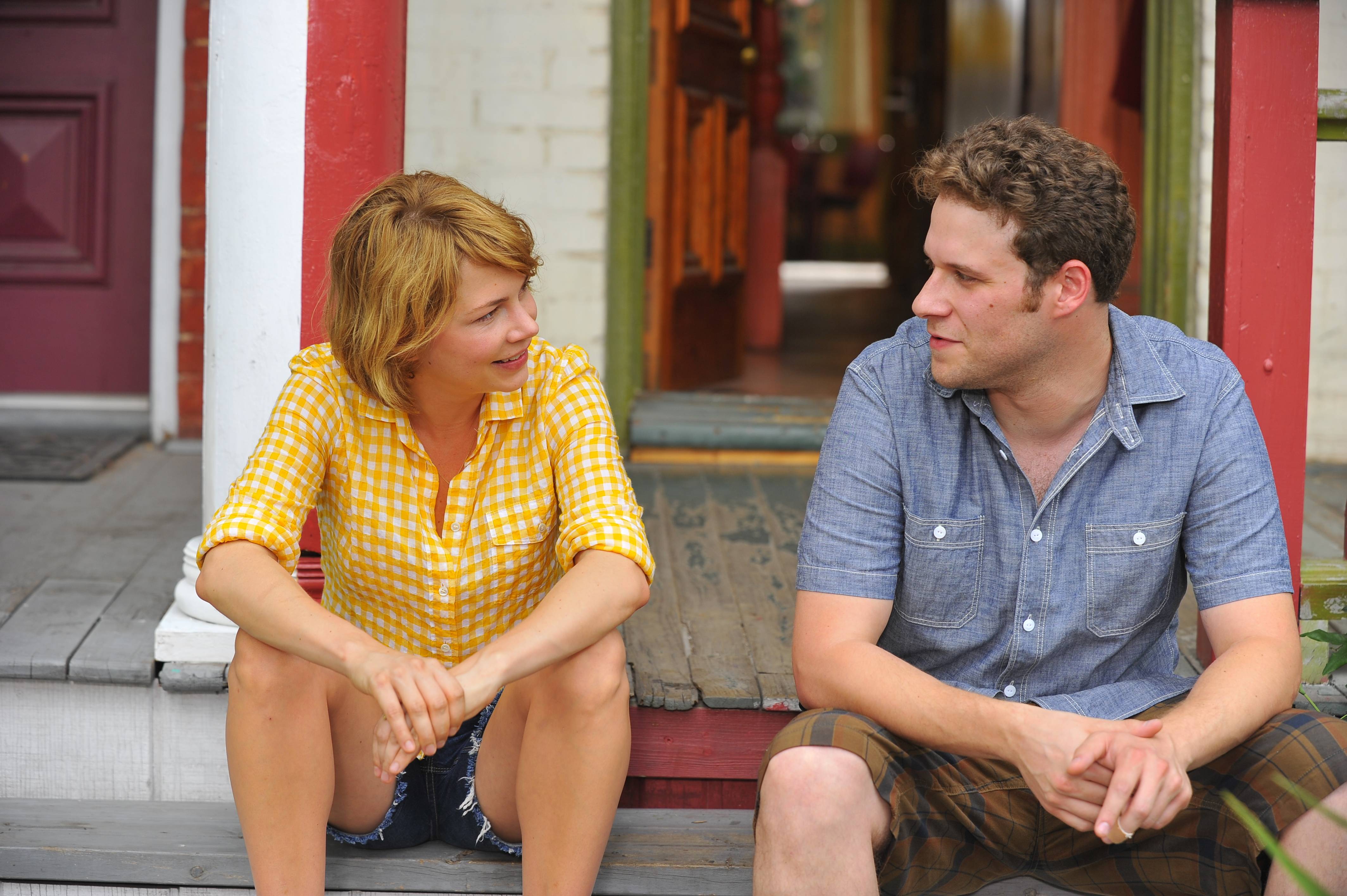
I don’t think Toronto has ever looked better onscreen (or sexier, for that matter) than the city does here, playing itself in Sarah Polley’s sophomore feature. Unfolding over a sweaty summer, Polley’s film charts a love triangle between a trio of richly drawn characters, featuring great performances from Michelle Williams, Seth Rogen (in an early role showing his genuine dramatic chops), and a magnetic Luke Kirby. This is sensual filmmaking, from the vibrant colours of Little Portugal, to an early morning rickshaw ride, and that scene on the scrambler at Centre Island perfectly set to “Video Killed the Radio Star.” A gorgeous, hot, heartfelt work that makes you fall in love with Toronto, even if you already live here. Pair it with Polley’s deeply personal documentary Stories We Tell, which she made next.
Monsieur Lazhar (2011)
There is something haunting at the centre of filmmaker Philippe Falardeau‘s Oscar-nominated French film Monsieur Lazhar, telling the story of an Algerian teacher (Mohamed Fellag) in Montreal who has to take over an elementary school class after their old teacher commits suicide. Sophie Nélisse appears in her breakout role as one of the students, delivering an exceptional performance from a child actor. This is one of those films that I saw at the very moment in my life when I needed it, so it’s stuck with me all these years in a pretty deep way. It’s a very moving but also life-affirming experience.
Mommy (2014)
I said this wouldn’t be a “best of” list, but you could make a strong case that Xavier Dolan’s Mommy is one of the absolute greatest films ever made in this country. Dolan, who started his career remarkably young with I Killed My Mother, made a film that most filmmakers would spend entire careers building towards, not make freshly out of the gate in their mid-20s. The brilliantly acted Quebec drama explores working class life and mental illness, with a rhythm and pace that allows for moments of cinematic bliss but also emotional gut-punches. Dolan pioneered changing aspect ratios, delivered a soundtrack of perfectly placed pop anthems (that Oasis “Wonderwall” needle-drop practically defines the genre), all while gloriously capturing the highs and lows of life. It’s still a masterpiece.
Sleeping Giant (2015)
Set in the Bruce Peninsula, director Andrew Cividino’s live firework of a coming-of-age film works as a summer hangout movie as much as it is a dark portrait of restless youth. The film follows a city kid (Jackson Martin) who’s staying in Thunder Bay for the summer, and tagging along with two locals (Reece Moffett and an incredible Nick Serino). The three boys spend the long days hanging out and getting into trouble. There is a volatility lurking beneath the surface of this one that makes it feel like a powder keg, building to a powerful finale. It’s a great summer film, too.
Nirvanna the Band the Show the Movie (2025)
Ok, I know I already mentioned it earlier, but I can’t not include this one. This is the film that fully cements director and star Matt Johnson (see also The Dirties, Operation Avalanche and BlackBerry) as one of the mad geniuses of Canadian cinema. We follow the exploits of hapless heroes Matt (Johnson) and Jay (co-writer Jay McCarrol) as they try to book a show at the Rivoli and time travel back to Toronto circa 2008. Has a purely Toronto film (not counting Scott Pilgrim vs. The World) ever popped off like this one? It’s already a near-legendary cult classic in film circles; a mix of creative mockumentary, elaborate Back to the Future homage, and love letter to our city that deserves to be experienced with a crowd. It’s also the 50th anniversary of the CN Tower this year, so think about that during the instantly iconic jump sequence.


